Persian Carpets:
Empire-Enduring Artistry
On the quiet authority of the world’s oldest textile tradition — and how to choose one that will outlive you.
The best Persian carpets aren’t bought — they’re chosen.
One encounters Persian carpets in the most unlikely places — softening stone floors in country houses or anchoring the conversation in some grand hall — where they hold a room together without ever raising their voice. I’ve always admired this quality: the quiet authority they possess.
Rooted in Iran’s 2,500-year history and known as the ‘mother of all carpets,’ they carry far more than decoration; they hold a civilisation’s artistry and spirit. For those who choose their possessions thoughtfully, they offer beauty that only deepens with time, and a value that endures. Their craft stretches back millennia, but true elegance flowered under the Safavids in the 16th and 17th centuries. From royal workshops came masterpieces like the Emperor Carpet or the Anhalt Carpet — works so prized they outshone gold or silver, now held safely in museums such as the Metropolitan. To stand before one is to witness what happens when time, skill, and vision align perfectly.
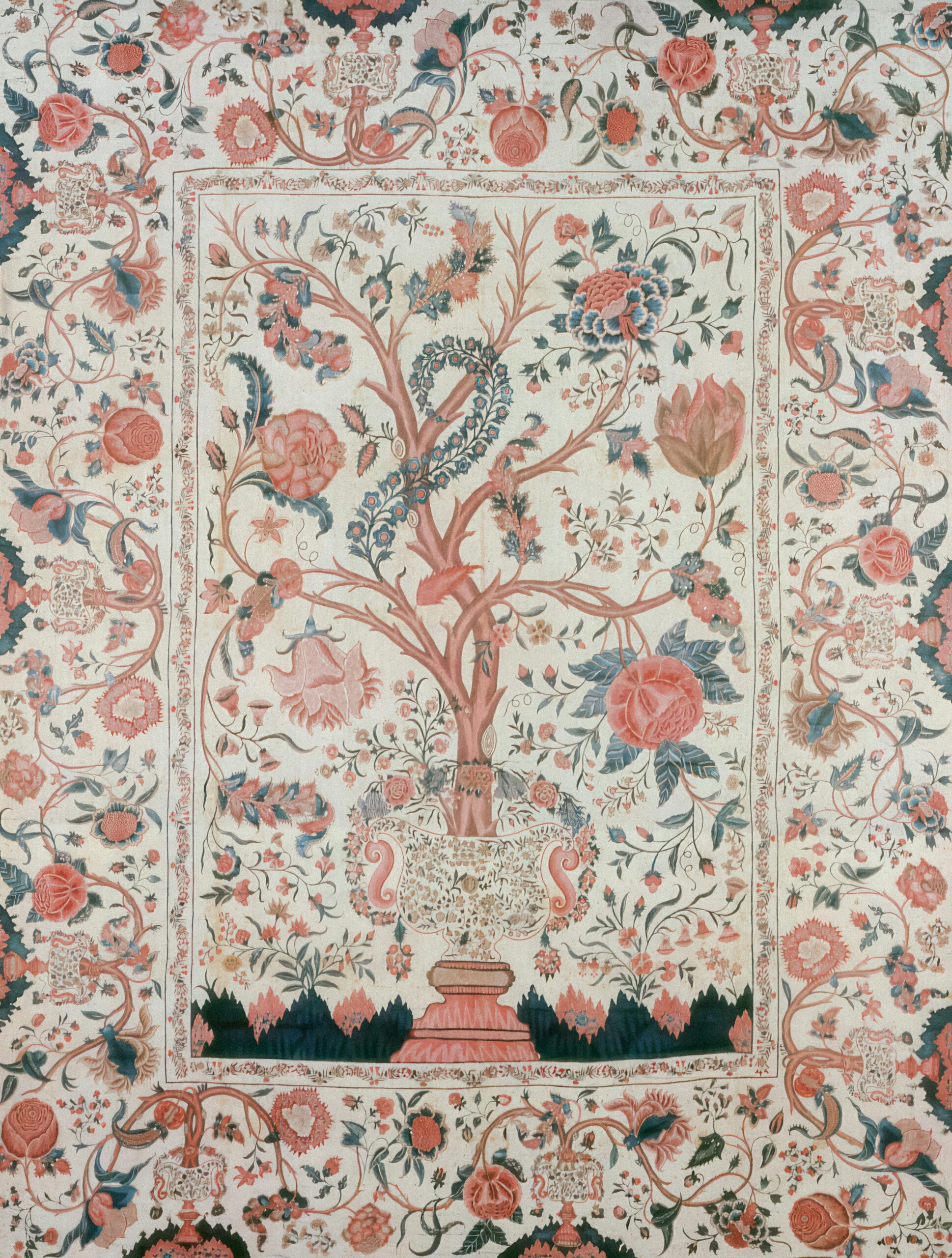
Vibrant antique Persian rug featuring tree of life motif with pomegranates, peacocks, tulips, and urn in crimson, indigo, coral, and ivory on cream ground
Materials & the Senses
What reveals a great Persian lies first in its materials, and here one learns to trust one’s senses. Wool from pashmina, the undercoat of highland goats, brings a natural silkiness that catches light just so. Qom’s pure silk pieces knot so finely they seem lit from within.
Above all, natural dyes — delphinium for yellow, indigo for blues — gain depth over decades. I’ve watched this transformation in carpets I’ve known for years; what chemical colours can never replicate is that gentle mellowing, that sense of living patina.
Region & Symbol
Each region speaks its own quiet language. Isfahan’s weavers achieve extraordinary precision, 1.5 million knots per square metre or more, their floral patterns echoing the city’s great architecture. Tribal rugs feel earthier — camels or tents appearing as if from memory, woven by hands that knew these subjects intimately.
Symbolism runs deeper still: borders to ward off evil, a tree of life for prosperity, the paisley boteh as life’s seed. Green carries the sacred; yellow stands watch against shadow. Once you know the language, you begin to read carpets as one reads poetry — each motif a word, each pattern a verse.
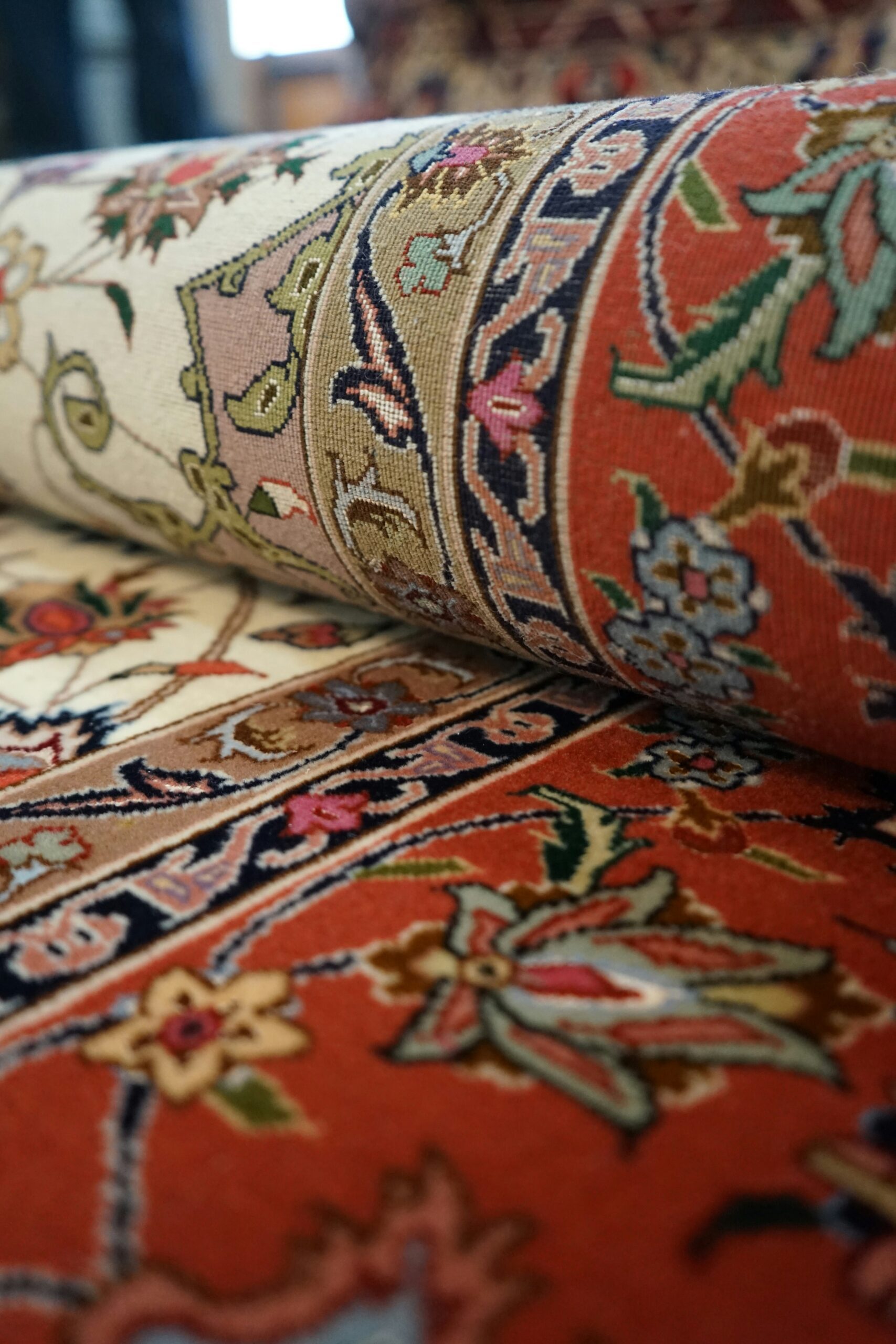
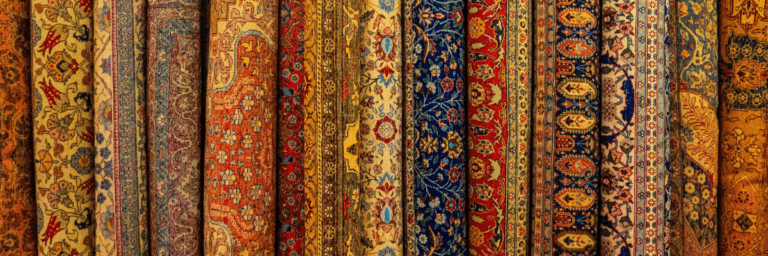
Hand-knotted Persian carpet rolled to show intricate floral border patterns and dense pile in coral and navy
What Households Understood
Traditional households understood something modern interior design has forgotten: that Persian carpets weren’t merely decorative. Certain patterns belonged in certain rooms — not by convention alone, but because weavers, over centuries, had observed what worked. Carpets dominated by blues and geometries graced libraries and contemplative spaces. Patterns in reds and earth tones anchored dining halls and reception rooms.
Why? The reasons have been largely lost. But the practice endured for centuries across cultures for a reason. When you place the right carpet in the right room, you notice it. Not consciously, perhaps — but you feel a quality of correctness that goes beyond colour coordination.
The Market Today
Today’s appeal rests in the making — years of a single weaver’s labour among Iran’s two million artisans, a trade second only to oil. ‘Made in Isfahan’ speaks for itself, and always has. Though tastes dipped in the 1990s, designers like Hossein Rezvani now blend ancient methods with modern restraint, their pieces reaching €10,000 to €80,000 with ease. And rightly so.
Natural dyes bring patina, not wear — the older the better, I’ve found. Tend them gently with curd soap and proper care against iron’s corrosion on brown wools. A well-chosen Persian needn’t be coddled, but it does reward attention. Rather like friendship, actually.
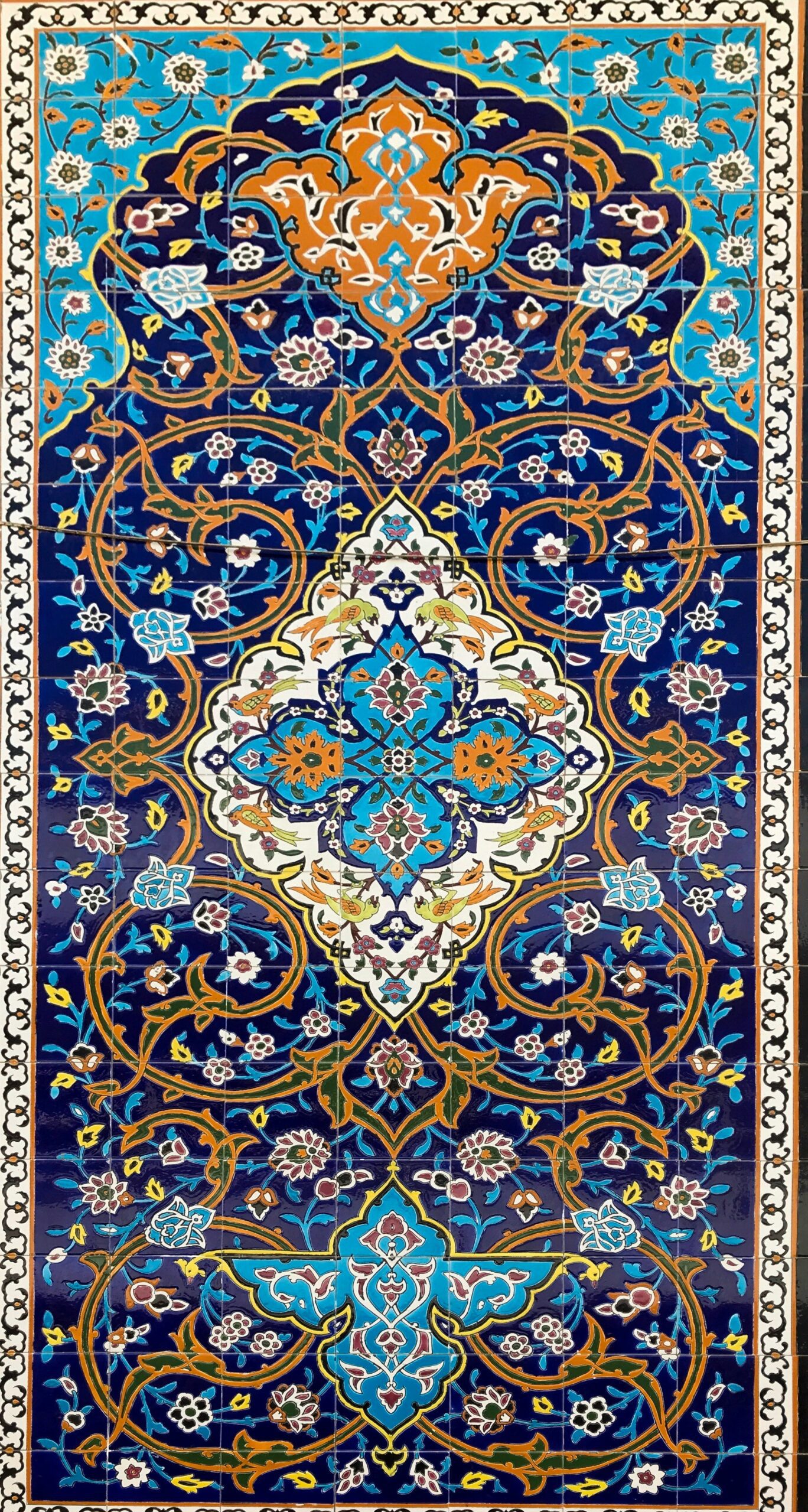
Shah Mosque tile panel from Isfahan with turquoise arabesques, floral motifs and intricate geometric patterns
A Persian carpet sits at the crossroads — East to West, past into present. Choose wisely, and it becomes more than possession: a living thread of culture, passed through generations. I suspect that’s the quiet magic of it — knowing that what lies beneath your feet has outlived empires, and will likely outlive you, too. There’s something rather comforting in that.
Under the gallery I’ll share a few particularly fine dealers and pieces worth your consideration. For now, trust your eye, trust the makers, and remember: the best Persian carpets aren’t bought — they’re chosen.
Here are five of the world’s most esteemed dealers specialising in antique Persian carpets, each with a reputation built on authenticity, vast inventories, and discreet expertise. All details verified from their official channels (as of January 2026). These houses typically operate by appointment, with home viewing for those who prefer privacy.