Linen Fabric
and the Art of Natural Luxury
Among nature’s oldest and strongest threads, linen carries a lineage that predates civilisation itself — and asks almost nothing in return.
To choose linen is to choose longevity, simplicity and light — qualities that never go out of style.
There is an honesty to linen fabric that feels almost human — a fibre born from earth and light, ancient yet alive with quiet grace. Among nature’s oldest and strongest threads, it springs from the flax plant, carrying with it a lineage that predates civilisation itself. I’ve always been rather fond of how little it asks of us: scarcely any water, no pesticides, and a gentleness towards the soil that speaks to those of us who still value stewardship over extraction.
Traces of linen have been found in Georgian caves, dating back 36,000 years — long before the Pharaohs wrapped their immortality in its spun grace. To the ancient Egyptians, linen embodied purity: a tribute to gods and rulers alike. Greek warriors once wore linen armour, sturdy yet sacred, while ritual and belief tied the fibre to the goddess Isis, who was said to have taught humankind the art of spinning.
Linen is more than a material; it is a story woven through centuries. And like heritage silver or hand-painted porcelain, quality linen represents an investment in pieces that improve with age and outlast trends entirely.
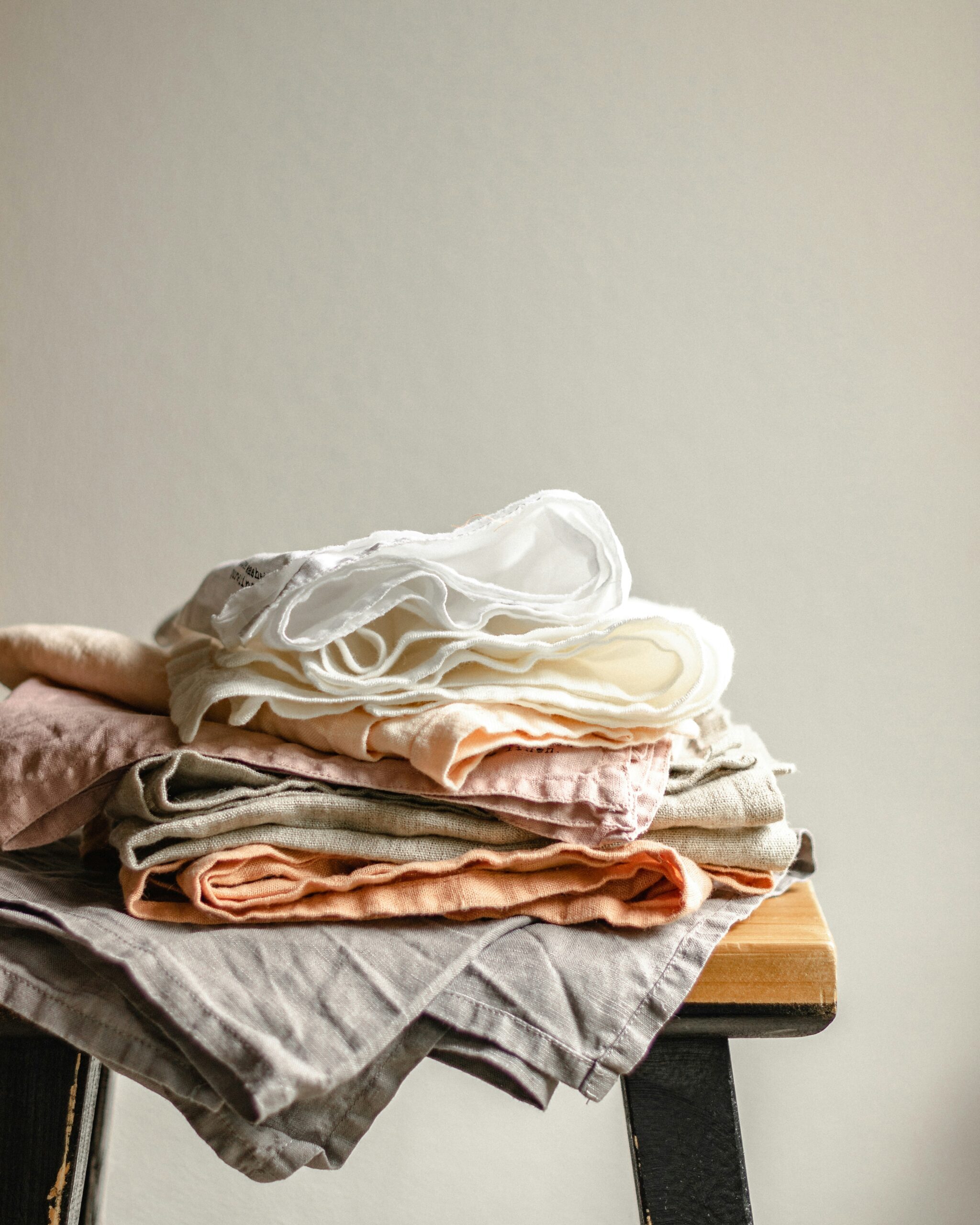
Linen fabric luxury table linens in white, peach, taupe, and blush stacked naturally.
The Nature of Linen
Linen fibres are hollow and smooth, able to absorb up to 20% of their own weight in moisture without feeling damp — remarkable absorption that keeps the skin comfortable through the warmest days. It is cool and breathable in summer, softly warming in winter, a textile that adjusts with the seasons. Hypoallergenic, antibacterial, and antistatic, it naturally soothes sensitive skin. And it is the second-strongest natural fibre after silk, growing softer with wear without losing its form.
There is something deeply satisfying about a material that improves precisely through being used. A well-cut linen suit or a flowing dress carries the ease of breath and the grace of purpose. Night after night, linen bed linen wraps the body in cool, cleansing stillness — a pure companion for rest. Pure in its cultivation, too: minimal water and energy use, grown without pesticides, and completely biodegradable. It gives a great deal and asks for very little.
Linen and the Art of Couture
In later centuries, linen became the fabric of refinement in Europe’s courts and ateliers. The celebrated tailor Pierre-Nicolas Sarrazin created French-style ensembles for Empress Maria Theresa in 1774. Louis Hippolyte Leroy, famed dressmaker to Napoleon’s court, re-imagined linen for the aristocratic wardrobe of summer. Each creation was a study in grace — dyed with plant pigments such as woad blue, madder red, or indigo, their hues regulated by guilds and softened by the fibre’s natural sheen. Light, breathable, and elegant, linen fabric became the favoured cloth for warm seasons, adorning noble silhouettes and oceanside promenades alike.
Even its unseen energy carries a quiet vitality. In the field of natural wellness, fibres are sometimes associated with vibrational frequencies — subtle resonances believed to reflect their natural purity. Linen is said to vibrate between 5,000 and 15,000 Hz, radiating a cooling, cleansing, and invigorating energy. Silk flows gently between 5,000 and 6,000 Hz, harmonising and smoothing the senses; wool warms and insulates at 5,000 to 7,000 Hz. It’s rather fascinating, this language of fibres — each speaking in its own quiet frequency.
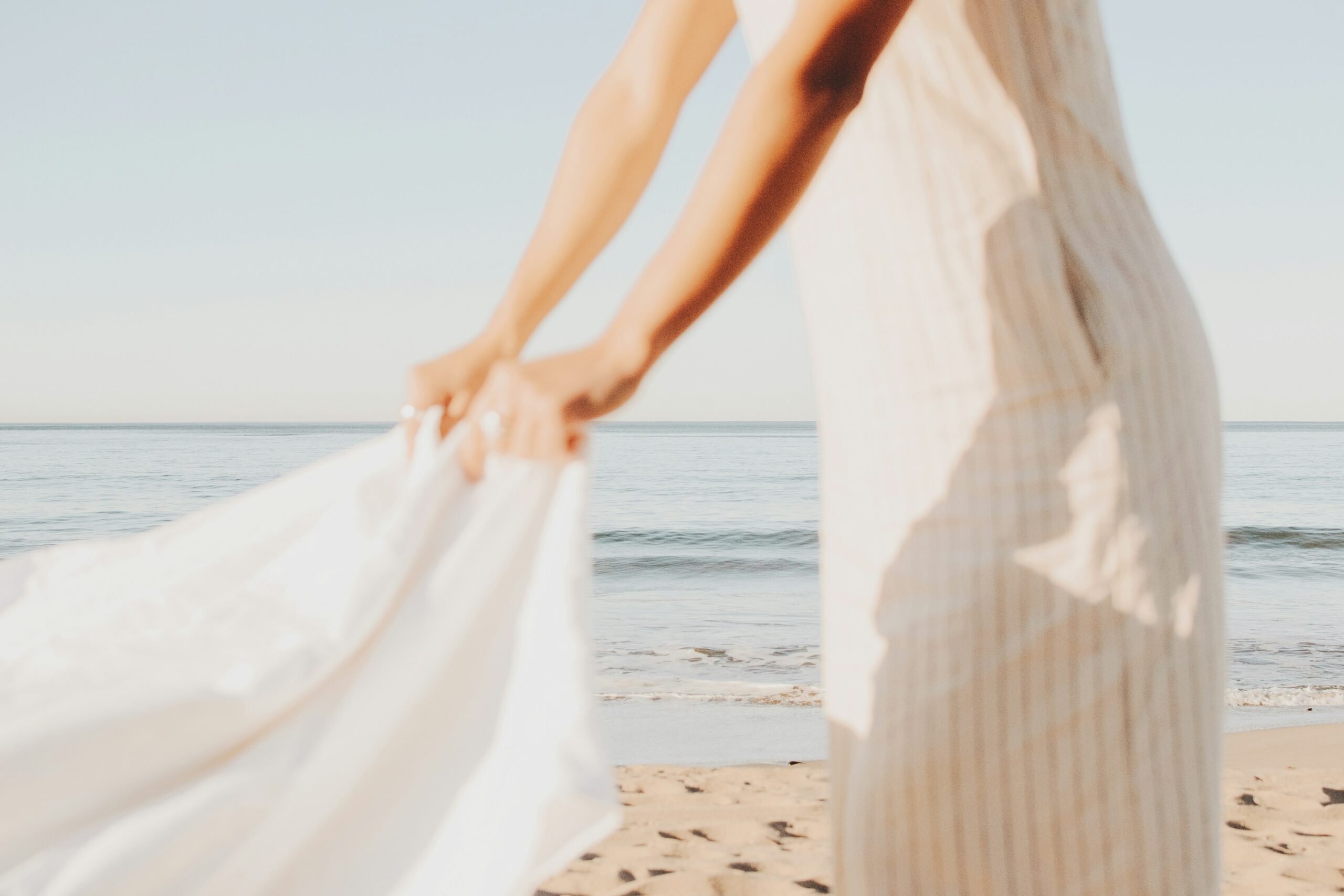
Linen Beach Maxi Dress
A Return to Living Textures
I find myself drawn to linen’s calm texture and honest origin — the way it reminds us that comfort needn’t compromise refinement. There is something quietly radical about choosing a material that improves through use, that carries its history in its weave, that connects us to a tradition stretching back tens of thousands of years. In a world of disposable textiles and fast fashion, linen is the quiet refusal.
To choose linen is to choose longevity, simplicity, and light. Qualities that never go out of style — and never will.
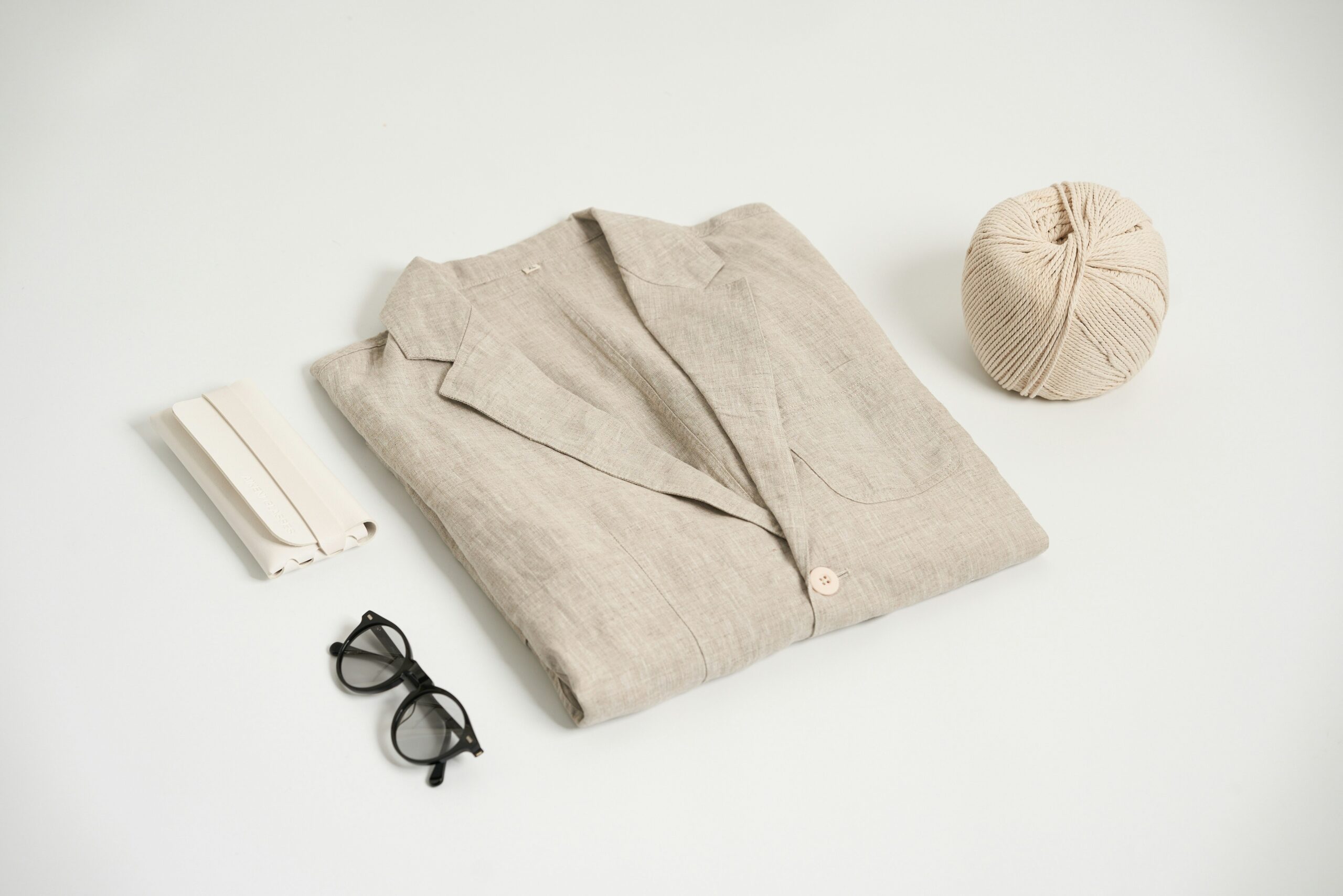
Luxury Linen Blazer Flat Lay
If you’re seeking the finest examples of this ancient craft, I’ve gathered a curated selection of purveyors whose work consistently honours linen’s noble heritage — from Italian ateliers to Belgian weavers to London-based designers who understand the cloth with rare intimacy.