

Winter Gardens:
Victorian Charm Meets Modern Living
Those graceful glass rooms where indoors and outdoors meet in quiet harmony — and why placement, light, and material matter more than you might think.
The owners took breakfast there every morning, regardless of the weather. Utterly civilised, I thought — the kind of timeless living that transcends trends.
I’ve always had rather a soft spot for winter gardens — those graceful glass rooms where indoors and outdoors meet in quiet harmony. Winter gardens remain one of those rare additions that genuinely transform how you live, offering a sanctuary for all seasons.
But there’s something more to winter gardens than mere aesthetics. Our ancestors understood that rooms filled with light and green growing things affect us in ways beyond visual pleasure. There’s a reason these spaces were positioned so carefully — typically facing south or east, capturing morning light, sheltered from harsh winds. These weren’t arbitrary choices. They reflected an understanding of how light, warmth, and living plants harmonise to create spaces that nourish rather than merely decorate.
Victorian glasshouses remain my favourite, though I confess a certain appreciation for sleek modern designs that bring that fresh outdoor feel right inside without the fuss of all those ornamental finials.
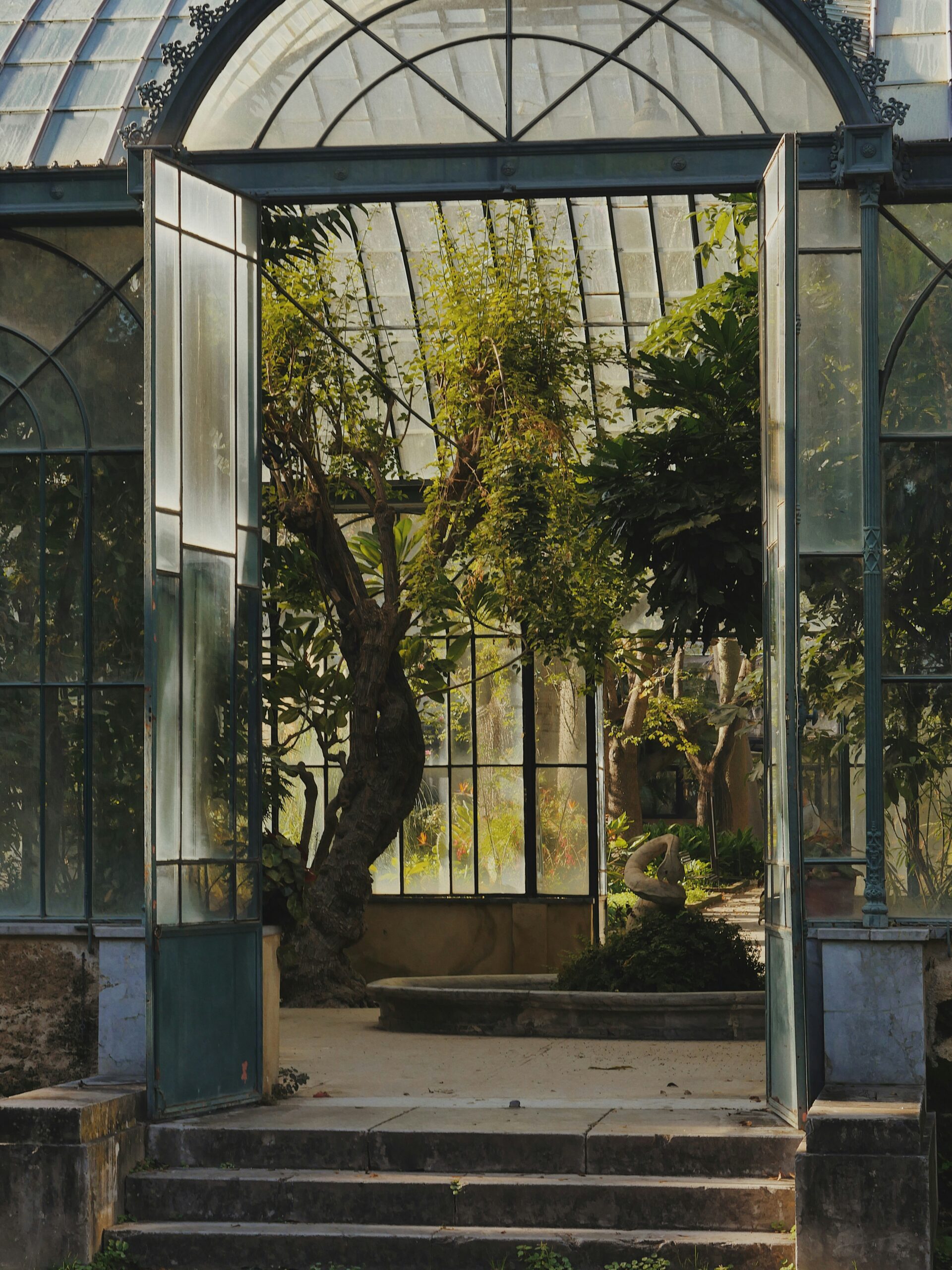
Victorian Winter Garden arched entrance with wrought iron glazing, climbing ivy and palm tree interior
A Brief History
The winter garden was born in 18th-century England, created for wealthy families keen to overwinter their exotic oranges brought back from the colonies. They evolved from ancient orangeries — those stately stone buildings with enormous south-facing windows. South-facing: this wasn’t aesthetic preference but practical wisdom. South-facing glass captures maximum winter sunlight, providing warmth when fires would otherwise be needed, and light at the season when it’s most precious. East-facing additions captured gentle morning light — energising, perfect for breakfast rooms. West-facing was avoided when possible, as afternoon sun in glass rooms can overheat unbearably in summer.
It was Victorian advances in glass and steel that made vast, ornate living spaces possible, transforming the winter garden into a true status symbol, warmed by sunlight alone and filled with ferns, palms, and all manner of exotic specimens. I remember visiting a rather splendid example in Mecklenburg-Western Pomerania some years ago — all wrought iron and curved glass, with a central fountain and climbing jasmine that scented the entire space. The room faced east. Morning light flooded in, but by afternoon the space was pleasantly shaded. The owners hadn’t stumbled on this by accident — their architect had understood what Victorian builders knew instinctively. Placement matters.
Creating Your Own
Let your imagination run free. A central fireplace provides warmth on truly bitter days, whilst lush furnishings can thrive without the constant threat of frost or damp. Deep seating, perhaps in linen or leather that ages beautifully. A proper reading chair positioned to catch the afternoon light. Terracotta pots brimming with citrus trees or camellias. Natural light floods in, allowing you to read, sip wine whilst music plays softly, or simply unwind with a book and a blanket. Or, if you’re feeling rather romantic, turn it into a second dining room for candlelit evenings with just a hint of garden magic lingering in the air.
A few practical observations from those who’ve lived with winter gardens for generations: south-facing gives maximum winter light and warmth, perfect for citrus and tender plants — though plan carefully for summer ventilation. East-facing is ideal for breakfast rooms, with gentle morning light and less afternoon heat. West-facing afternoon sun can be brutal in glass; avoid unless you relish the heat or plan extensive shading. North-facing gives steady, cool light year-round — surprisingly lovely for ferns and shade-lovers, though you’ll rely more on heating.
Materials matter, too. Stone or tile floors absorb heat during the day and release it slowly at night, creating surprising warmth even in winter. Wood stays cooler, feels warmer underfoot, and suits temperate climates. Our ancestors knew these things not through science, but through living with spaces season after season.
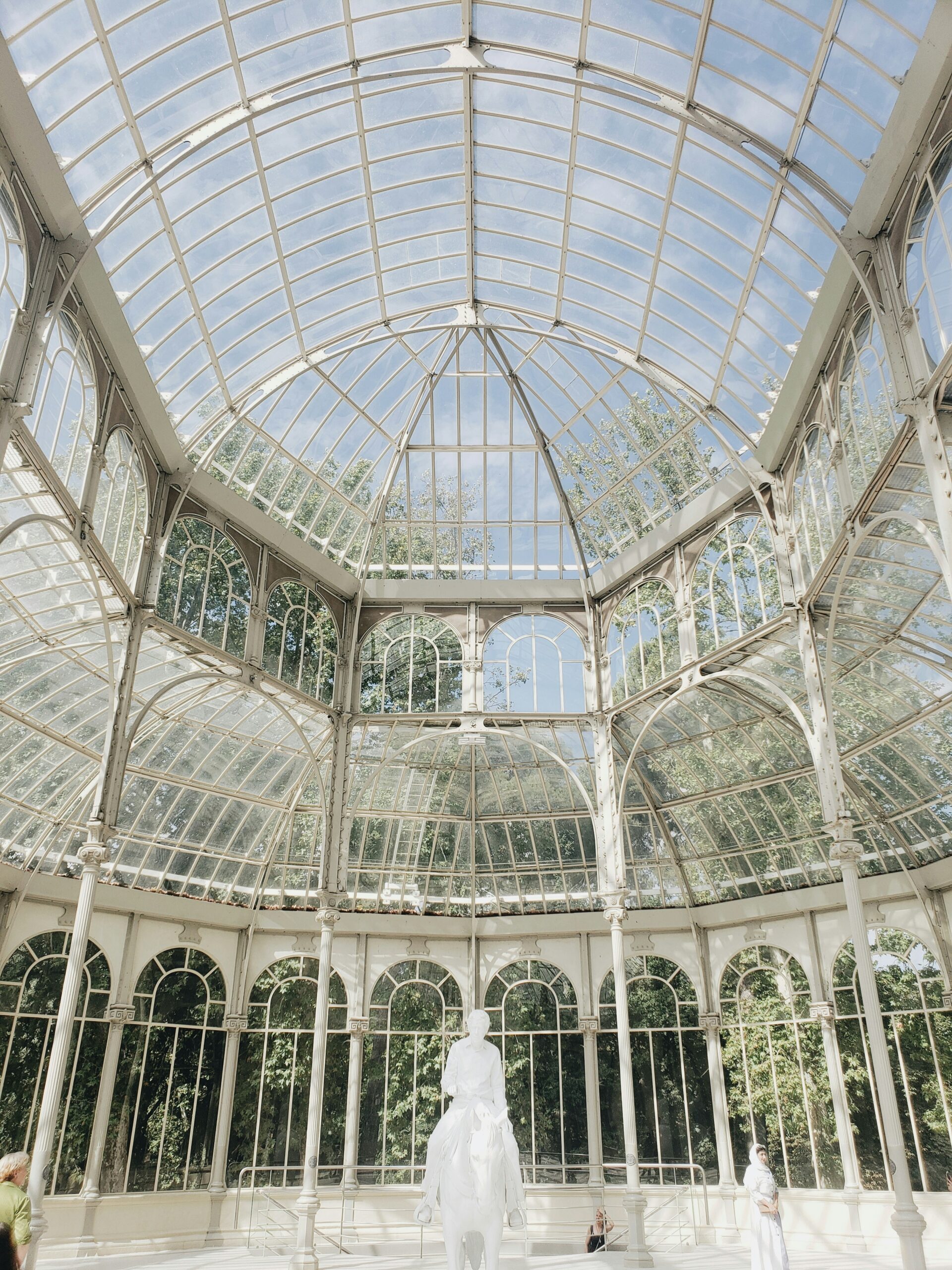
Victorian Winter Garden dome with curved iron frame and multi-pane glazing under arched ironwork
Practical Considerations
Do consult with someone who understands both architecture and horticulture — the balance of ventilation, heating, and light in a winter garden is rather more nuanced than one might think. And if you can find someone who understands more than just engineering — someone who knows why Victorian builders positioned these rooms where they did, why certain orientations suit certain purposes — so much the better. Modern architects often think purely in terms of aesthetics or energy efficiency. The best consultants understand that a winter garden should harmonise with your home’s character, your daily rhythms, even the seasons you most enjoy.
Victorian structures are glorious but can be wildly impractical if not properly adapted for modern living. Contemporary designs often handle temperature control far more elegantly, though they may lack a certain romantic charm. Either way, a well-designed winter garden becomes one of those rare additions that genuinely transforms how you live — a room for all seasons, where January feels almost as inviting as June.
What Style Speaks to You
The beauty of a winter garden is that it’s entirely yours to shape — a spot that feels utterly personal. Some prefer to keep theirs minimal and modern, all clean lines and strategic greenery. Others embrace the Victorian spirit with trailing vines, vintage wicker, and collections of botanical prints. There’s no right answer, only what speaks to you — and what suits your home’s orientation, your climate, your life.
In times when we spend rather too much of our lives staring at screens, there’s something deeply restorative about a space that insists on natural light, living plants, and the gentle rhythm of the seasons just beyond the glass. Not as decoration. As necessity. I encourage you to visit a few — perhaps over tea, naturally — and see which style speaks to you. Pay attention to how you feel in each space. Not just how it looks, but how it feels. That instinct is wiser than you might think.
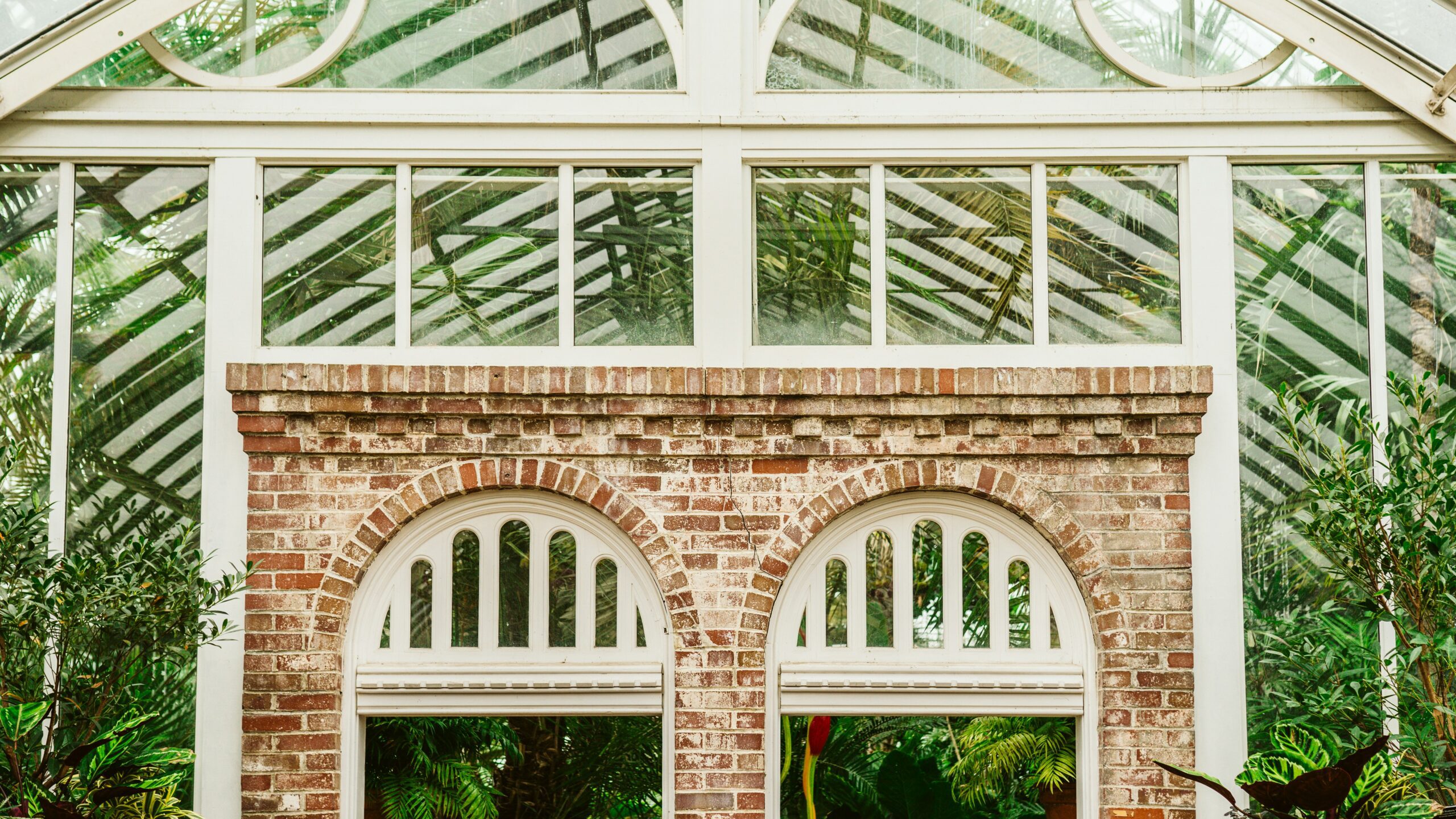
Victorian orangery winter garden with twin arched brick windows and slender iron glazing bars
Not all of us have a winter garden at home — yet. But knowing where to look is half the pleasure. I’ve gathered a few makers worth exploring, each with a genuine understanding of what these spaces can be at their finest.