Cobalt Blue Porcelain:
A Journey of a Royal Whisper
From Persian mines to Chinese imperial kilns to European manufactories — the story of a blue that travelled further, and cost more dearly, than most people realise.
Extraordinary, really, what people will endure for beauty.
That particular shade of azure on cobalt blue porcelain — the one that seems to glow from within white surfaces, as if lit by some internal fire — has travelled further and cost more dearly than most people realise.
Over centuries, cobalt blue porcelain has been far more than decoration. It tells a tale of perilous mining, Silk Road commerce, and the profound exchange between Persian ingenuity and Chinese mastery.
Known as the ‘royal blue’, this pigment lent an otherworldly lustre to porcelain that captivated emperors and connoisseurs alike. It was a treasure so rare, it forged what one might call a ‘blue route’ across continents.
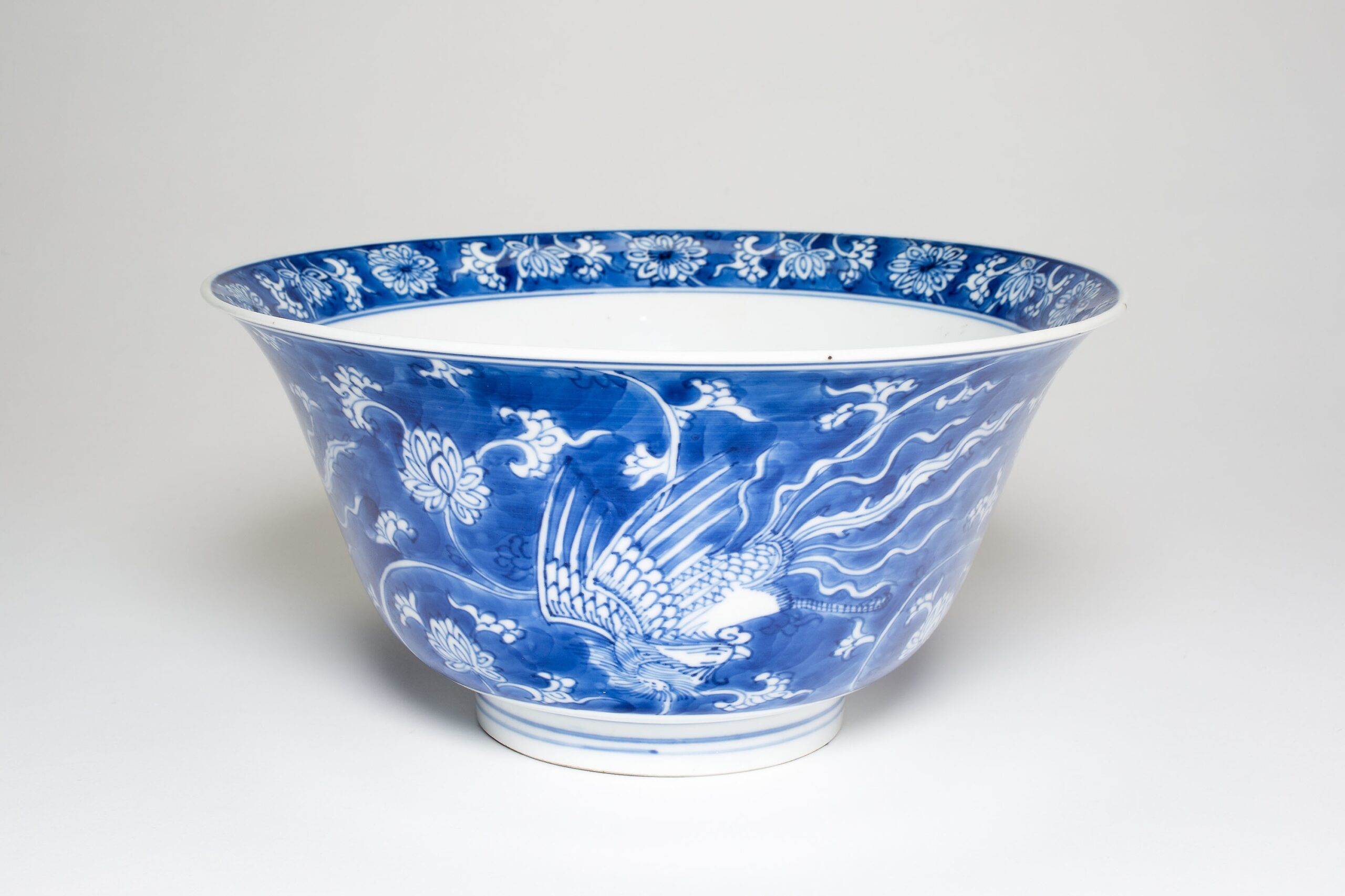
Cobalt blue porcelain bowl with underglaze phoenix in flight amid traditional Chinese clouds
Origins: Danger and Allure
The story begins, as so many good ones do, with danger. From the Kaschan mines in what is now Iran, miners in 1301 unearthed a treacherous ore — one variety evoking pistachio husks in red (erythrite), the other gleaming silver (cobaltite). Laden with arsenic, dubbed a ‘deadly poison’ in ancient texts, it demanded arduous refinement. Yet this very peril elevated cobalt to ‘blue gold’.
In China, prized as ‘Muslim blue’ (Hui Hui Qing) — perhaps nodding to the prophet Suleiman — it became the lifeblood of imperial kilns. But there was more to cobalt’s appeal than rarity. In Persian and Chinese traditions alike, blue represented the heavens, wisdom, and spiritual elevation. It wasn’t chosen arbitrarily for imperial porcelain. It was chosen because it signified something — authority that came not from earth, but from above.
The Azure Thread Across Cultures
This azure thread wove cultures together in ways few materials have managed. Ninth-century potters in Samarra, Iraq, first graced Islamic ceramics with cobalt, crafting tin glazes to mimic Chinese porcelain’s purity. By the Yuan Dynasty under Mongol rule, Persian cobalt flowed into Jingdezhen’s vast workshops. There, artisans perfected underglaze mastery: the pigment brushed beneath translucent glaze, then fired at a blistering 1300°C — yielding an indelible, radiant depth no surface colour could rival.
Beyond craft and commerce lay something subtler. Cobalt blue wasn’t merely beautiful — it was appropriate in ways our ancestors understood instinctively. Blue signified wisdom, contemplation, the celestial realm. Porcelain, with its translucent purity, was considered the most refined material — earth transformed by fire into something almost ethereal. Together, they created objects suited not just to any table, but to occasions of significance. Gifts like the Ardabil Shrine’s 1,100 pieces — now treasures in Istanbul’s Topkapi Palace — attest to their prestige.
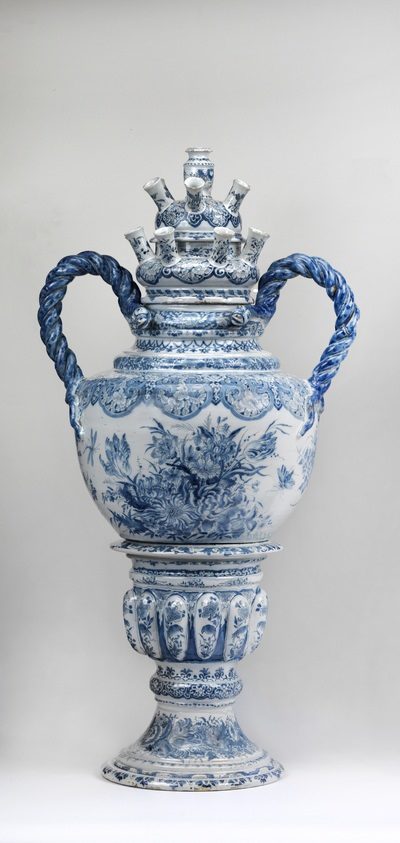
Cobalt blue porcelain tulip vase by De Grieksche A Delft with chinoiserie and crown finial
Europe’s Blue Pursuit
Cobalt’s azure allure soon captivated Europe, where ambitious manufactories raced to rival Chinese mastery. In Saxony, Augustus the Strong — porcelain-obsessed Elector and King, a man who once traded an entire regiment of dragoons for a set of Chinese vases — founded Meissen in 1710, Europe’s first true porcelain works. After years of secret trials, a stable underglaze formula emerged around 1739, birthing the iconic Zwiebelmuster (Blue Onion) — a pattern that remains, to this day, a timeless emblem of hand-painted refinement.
Berlin’s Königliche Porzellan-Manufaktur (KPM), established in 1763 by Frederick the Great, perfected the cobalt sceptre mark — a blue underglaze guarantee of royal quality. Their Kurland service, with deep cobalt borders, embodied Prussian elegance and influenced courts across the continent. Further afield, Bohemia’s Thun 1794 harnessed local kaolin for robust cobalt blue decors, while Italy’s Richard Ginori (est. 1735) pioneered cobalt transfer-printing — experiments yielding plates where grey-tinged cobalt sang against translucent bodies.
Why Cobalt Blue Transcends Fashion
What strikes me most is how cobalt blue porcelain transcends fashion. Trends come and go — God knows we’ve all seen enough of them — but that particular shade of blue on white remains perpetually elegant. Our ancestors understood that certain combinations simply work — not because of cultural convention alone, but because they harmonise in ways we notice without quite naming. Blue (the colour of wisdom, contemplation, the celestial) on white (purity, clarity, receptivity) creates balance. It suits contemplative settings — libraries, studies, morning tea — as naturally as heavier, warmer colours suit convivial feasting.
The beauty of cobalt blue porcelain is that it needn’t be museum-quality to be wonderful. A single Meissen plate, a KPM cup, even a well-chosen piece from Thun can anchor a table setting with quiet authority. Consider this: cobalt blue harmonises naturally with silver (both share a cooling quality), with light linen, with spaces meant for contemplation rather than conviviality. For grand dinners, winter evenings? Reach instead for warmer porcelains — those with gold, reds, earth tones. This isn’t rigid rule. It’s simply observation: certain materials suit certain moments, certain moods, certain purposes.
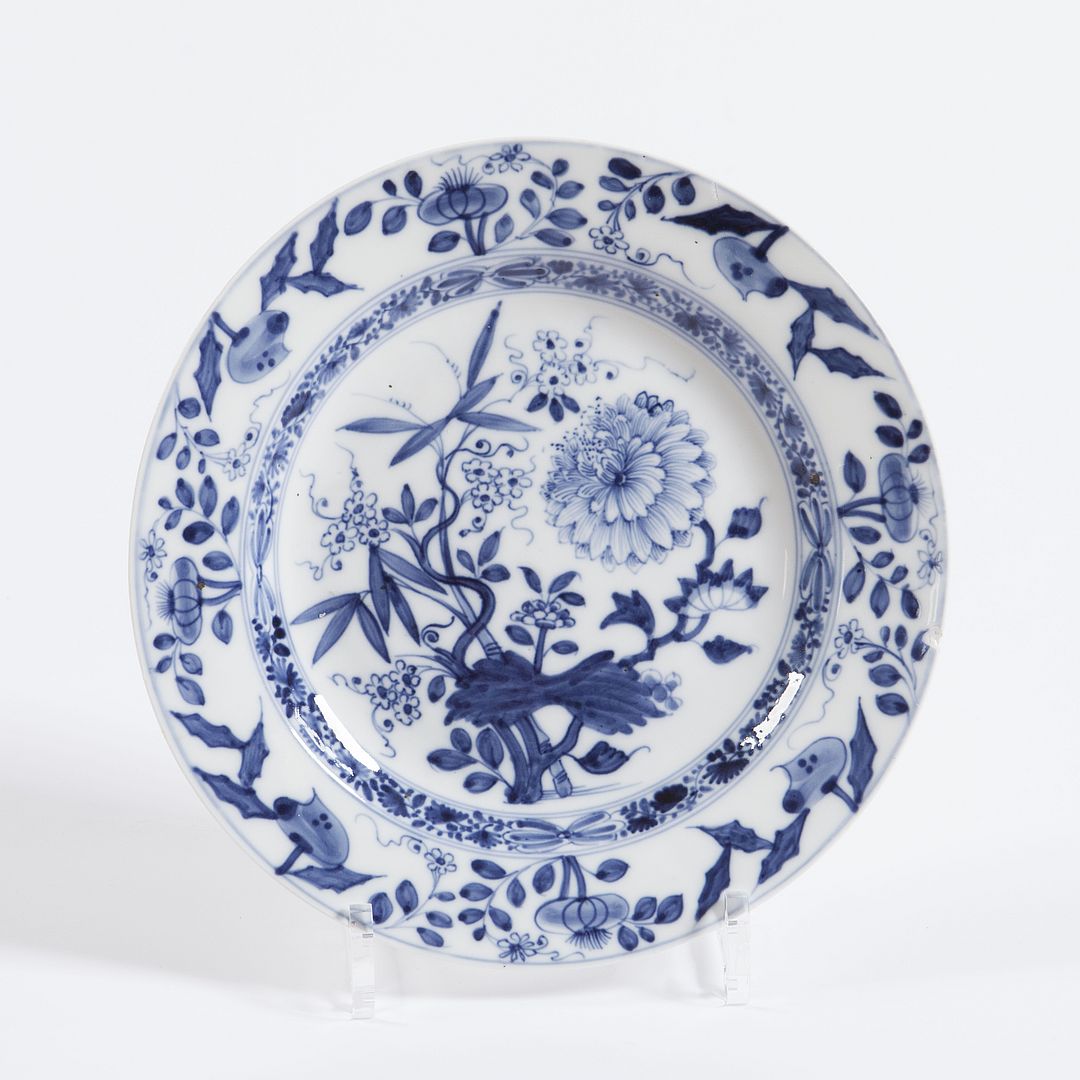
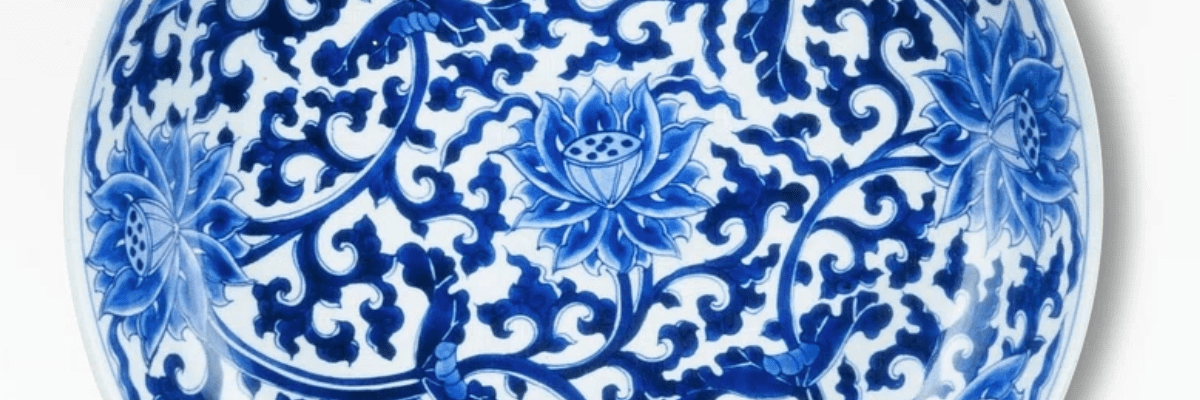
Cobalt blue porcelain in Zwiebelmuster blue onion style with central chrysanthemum and foliage
From Persian mines to Chinese imperial kilns to European manufactories, cobalt blue porcelain represents one of history’s great artistic achievements — beauty that whispers rather than shouts, craftsmanship that transcends trends, objects that improve spaces simply through their presence.
Visit museums when you can, handle pieces when the opportunity arises, and learn to distinguish the genuine article from its many imitators. Your eye will thank you. These pieces represent more than decoration — they’re conversations across centuries, tangible connections to craftspeople who understood that beauty requires time, skill, and an almost unreasonable devotion to getting things right.
The real luxury, I think, is not ownership but stewardship — of beauty and understanding that flows through generations. And even more satisfying than knowing what these pieces are, is understanding why they belong where they do. That knowledge transforms acquisition into curation, and curation into wisdom.