Silver Cutlery:
The Finest Classical Makers & Patterns
A personal guide to the silver legends — and the knowledge of when, and why, they truly shine.
One might call it superstition — but I rather prefer the notion that observation often precedes what science later confirms.
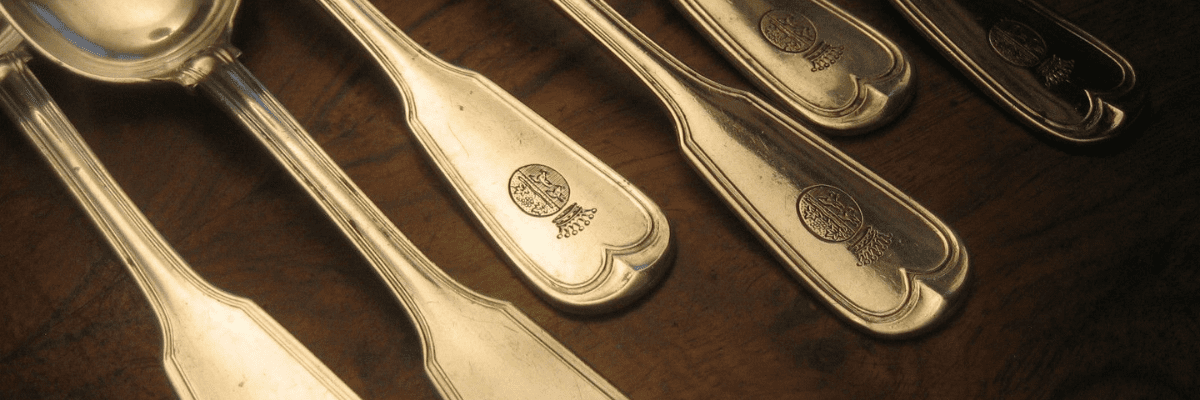
Silver cutlery swiftly turns me melancholic — owing to the fact that in my childhood I truly had the silver spoon in my mouth. In my grandmother’s household, proper silver cutlery was quite the norm to lay the table properly, and that naturally included the family silver.
It mattered not a jot if the little ones at table nonchalantly grabbed the dessert spoon for their soup and clinked about with it. It was all about the principle, and in time we all absorbed the knack of selecting the right piece without a second thought or laborious count.
That, too, is tradition — offering quiet assurance, and one that belongs in every home, entirely regardless of whether the cutlery be stainless steel or a silver alloy.
The Silver Spoon’s Secret
There is, of course, that curious phrase about being “born with a silver spoon in one’s mouth” — and quality silver cutlery has long held practical significance beyond mere status. From ancient times, silver vessels were prized for keeping water fresh and food wholesome on long voyages. Our ancestors observed, long before science could explain it, that silver prevented spoilage — what we now understand as its oligodynamic properties, those gentle ions that discourage bacteria.
But there’s more to silver’s historical preference than preservation alone. Our ancestors also understood something subtler: that certain materials suited certain occasions, certain moods, certain purposes. Silver harmonised with intimate gatherings — family meals, quiet dinners, private celebrations. Its cooling touch, its gentle lustre by candlelight, its quality of reflection rather than radiance — all made it the natural choice for meals where closeness, not ceremony, was the aim. This is why aristocratic households reserved silver for family tables while gold marked state occasions. Not merely convention — practical wisdom, refined over centuries.
This practical magic made the silver spoon a baptismal gift across centuries. Aristocratic families presented infants with their own small spoon, not merely as privilege but as protection — a talisman against the fevers that claimed so many young lives. Historical records confirm that noble children, raised on silver spoons and plates, fared better than their poorer counterparts. The phrase endures because it held real truth.
On Modern Minimalism
I’ve little time for these ‘new’ purist or ‘designer’ pieces; to me, they often resemble operating theatre kit, sit poorly in the hand, and simply lack that essential feel, no matter how exorbitant or exclusive. Silver cutlery isn’t merely functional — it carries weight, temperature, presence. The cooling touch of silver against the palm. The way it catches candlelight without glare. The subtle balance that comes from centuries of refinement, not computer-aided design. These aren’t frivolous concerns. They’re the difference between cutlery that enhances a meal and cutlery that merely serves it.
Over the years, I’ve had the privilege of sitting at any number of splendidly laid tables, gaining a broad view of old — timeless, as I see it — cutlery patterns. What strikes me is how consistently the finest makers understood something beyond aesthetics: that silver cutlery should harmonise with the occasion it graces. Even today, one can still acquire truly splendid, comprehensive silver cutlery canteens. A serious investment, certes, but one that falls squarely under ‘buy it once’ — and one that, if chosen wisely, will suit your table for generations.
When Silver Truly Shines
Our ancestors understood instinctively when silver was appropriate — and when it was not. Silver graced family meals (intimacy, not ceremony), summer gatherings (its cooling touch welcomed), evening dinners by candlelight, and intimate celebrations among loved ones. They reserved heavier materials — or gold, when families possessed it — for state occasions, grand winter feasts, and large formal gatherings where spectacle, not intimacy, was the point.
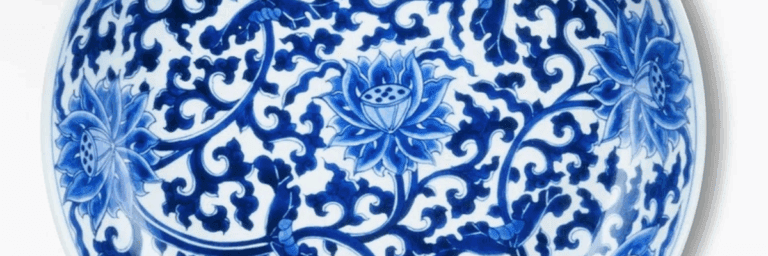
This wasn’t arbitrary. Silver’s qualities — cooling, reflective, calming — suit certain contexts more naturally than others. Just as cobalt blue porcelain suits contemplative settings while warmer porcelains anchor convivial feasts, silver harmonises with moments of quiet connection. Silver pairs beautifully with fine bone china (both share a cooling quality), with light linens, with occasions where warmth comes from company, not ceremony. Knowledge like this transforms ownership into curation. And curation, into wisdom.
The Makers I Hold in Highest Favour
Robbe & Berking always stirs a touch of nostalgia — these pieces breathe that rare, honest craftsmanship one scarcely finds today. Founded in 1874 in Flensburg, the manufactory prizes handmade quality over mass production. Their Alt-Spaten, straight out of the 18th century with its long handle and signature ‘ears’, sits beautifully in the hand. Alt-Faden draws on an old Augsburg motif from 1760, utterly timeless and understated. Ostfriesen captures North German Baroque mood with bold arches and ornaments, crafted virtually unchanged for over a century.
Christofle gives me proper goosebumps — pure French flair, elegant yet never overdone. Established in Paris in 1830, they secured the patents for electroplating in 1842, revolutionising the scene. Louis XVI from 1907, with Delafosse garlands and rosettes, echoes the 18th century without fusty reverence. Perles from 1890 brings delicate pearl motifs of exquisite fineness. Rubans, with its ribbon ornaments, radiates elegance and tradition without fuss.
Gebrüder Reiner instantly evokes sturdy Bavarian groundedness. Founded 1874 in Krumbach by a silversmith trained in Augsburg, their Augsburger Faden is clear, well-proportioned, and never dates. Spaten, one of the house’s enduring patterns since the 1870s, charms with its generous blade — versatile for any occasion, a quiet nod to Bavarian heritage. Wilkens, founded in Bremen in 1810, is among the oldest still producing. August der Starke blends Baroque fullness with a Chippendale nod — weighty and noble, perfect for grand occasions. Argento, with flowing curves and substantial presence, is fresh yet true to heritage.
Puiforcat hits with that Parisian chic — sculptural, noble, never ostentatious. Purveyors to European courts since the mid-19th century and now silversmithing’s haute couture, their Élysée pattern — the official cutlery of the Élysée Palace — exudes quiet authority effortlessly. Ercuis, born in 1867 and today gracing grand hotels and starred kitchens across France, offers the sleek, balanced Brantôme — butter-smooth in the hand — and the Vieux Paris, which renders classical Parisian tradition entirely contemporary.
There you have it, darlings — a curated coterie of silver legends that whisper of enduring craft and timeless tables. These pieces embody the quiet luxury we seek: quality that transcends trends, craftsmanship that endures generations.
Whether paired with cobalt blue porcelain for a summer breakfast or brought out for candlelit family dinners, invest wisely, cherish deeply — and let them grace your life for generations. For more on creating tables of lasting beauty, do explore my thoughts on timeless elegance.