Easter Customs at the European Courts:
And Why They Still Matter
Every court organised the weeks around Easter as a passage — a movement through darkness into light. The structure was the meaning.
A feast without its preceding fast carries no weight. Light announced only by itself has no drama.
The weeks before Easter change the quality of light — or perhaps it only seems that way because one has always associated the season with a particular kind of alertness. The yellow of narcissi appearing quite suddenly along paths one had walked in grey for months. The specific scent of the first hyacinths brought indoors. The sense that the year, at last, intends to begin.
In our household, Easter was never merely a holiday. It was the first great occasion of the year — the point at which the house was shaken thoroughly awake. Carpets were hauled out and beaten, mattresses turned, every room submitted to a severity of cleaning that now strikes me as almost ceremonial in its thoroughness. Spring cleaning, one calls it casually; but there was nothing casual about it. The house was being renewed, as the season renewed itself.
Easter customs — the real ones, the ones that endured for centuries at the courts of Europe — were never decorative. They were structural. They marked the boundary between what had been and what was to come. One notices, when considering the Easter practices of the English, Habsburg, Russian, French, and Italian courts together, not their differences but their underlying agreement: every court organised the weeks around Easter as a passage. The structure was the meaning.
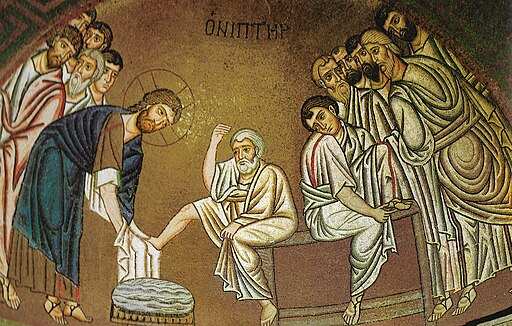
Byzantine mosaic of the Maundy foot washing scene at Hosios Loukas monastery, Greece
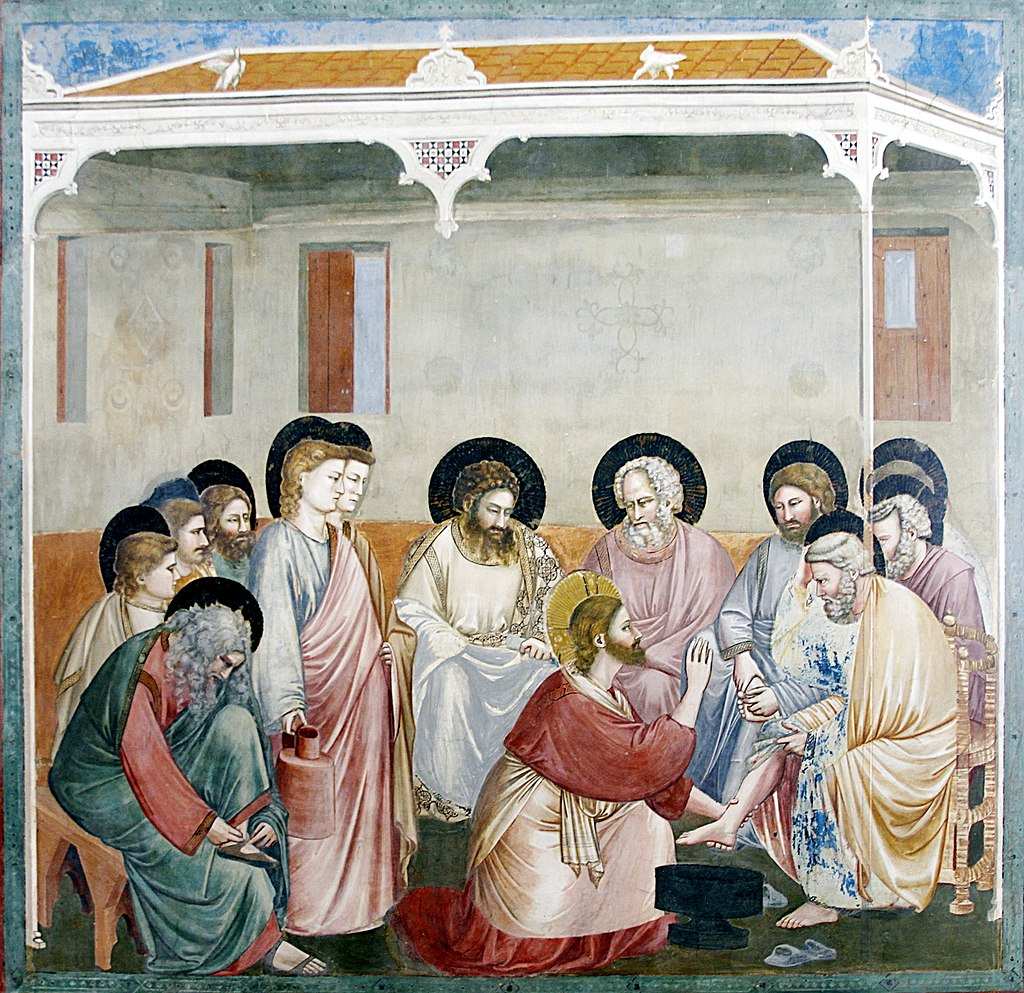
Giotto’s fresco of the Washing of the Feet in the Scrovegni Chapel, Padua
England: The Theatre of Humility
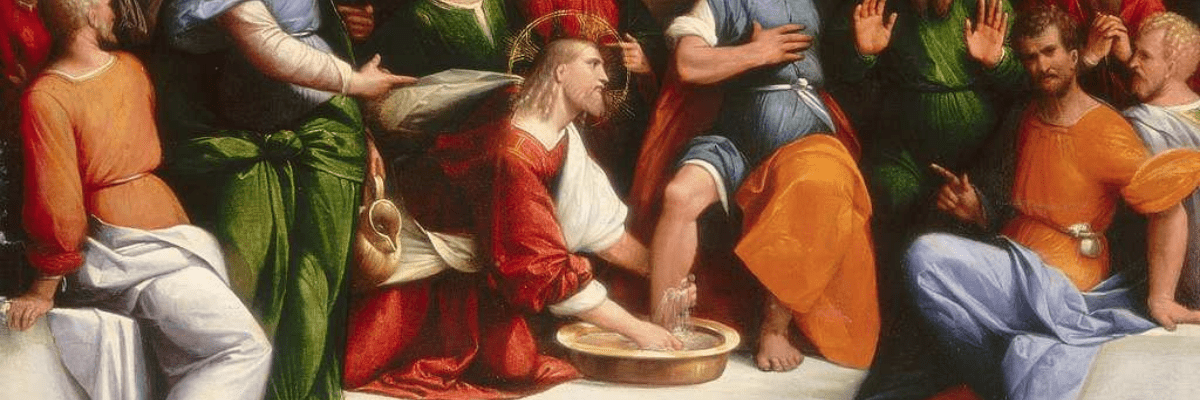
The most persistent of all Easter customs at the English court is perhaps also the most quietly radical: on Maundy Thursday, the sovereign knelt before the poor. The Royal Maundy ceremony traces its origins to the 13th century and takes its name from the Latin mandatum — the commandment Christ gave at the Last Supper to love one another. In the earliest English practice, this meant precisely what it sounds: the monarch washed the feet of poor subjects with his own hands.
Mary I in 1556 went further still. Forty-one poor women were brought to court. The feet were washed three times in sequence — first by a servant, then by the sub-almoner, then by the lord high almoner, and finally by the Queen herself, on her knees. She gave each woman her own purse and, to the poorest among them, the purple gown from her own back. Elizabeth I, who continued the tradition with characteristic pragmatism, eventually substituted a sum of money for the gown — recording that she wished “to avoid the trouble of suit which accustomably was made for that preferment.”
By the 18th century, the foot-washing itself had been quietly dropped. What remained — and remains to this day — is the distribution of Maundy money: specially struck silver coins, presented by the sovereign in red and white purses to a number of recipients equal to the monarch’s age. The peculiar logic of this tradition, sustained across eight centuries and every variety of English monarch, is worth dwelling on. The most powerful person in the country was required, once a year, to make a public gesture of service to those with the least. Whether the gesture was felt or merely performed matters less than the fact that the structure existed.
The Habsburgs: Pietas Austriaca
In Vienna, the Easter ceremonies were built on a philosophy — one the Habsburgs had developed into something close to a governing principle. Pietas Austriaca: the public demonstration of deep Catholic faith as both personal conviction and political legitimacy. The Habsburgs did not merely rule by divine right; they were seen to live it. On Gründonnerstag, Emperor and Empress knelt before twelve old men and twelve old women brought specially to court, and washed their feet. This was not a private devotion. The Habsburg court was a theatre, and every gesture was witnessed, recorded, and understood.
During Lent, the social calendar of Vienna contracted sharply. No balls. The Church year did not merely run alongside aristocratic life — it structured it. One cannot understand the particular weight that Easter carried at the Habsburg court without understanding that it arrived after six weeks in which the court had genuinely altered its behaviour. The Fronleichnam procession, held after Easter, was perhaps the grandest expression of this philosophy: every member of the Hofgesellschaft appeared in order of rank, Thron und Altar visibly united before the people of Vienna. Ceremony as argument. The Habsburgs understood this with unusual clarity.
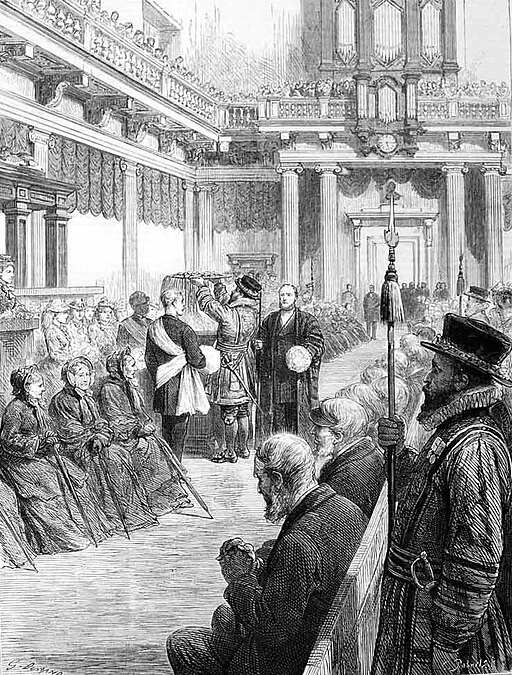
Victorian engraving of the Royal Maundy ceremony 1877 at Westminster
Russia: Midnight, Candlelight, and Kulich
For the Orthodox world, Easter — Paskha — outranks Christmas entirely. This is not a preference; it is a theological position. The Resurrection is the central fact of Christianity, and the Russian court celebrated it accordingly. The Paskha liturgy begins in darkness. The cathedral is unlit. The congregation stands — there are no pews in Orthodox churches — in a silence that lasts until midnight. Then the bells. The priest proclaims: Khristos voskres! — Christ is risen! — and the congregation answers: Voistinu voskres! — He is truly risen! The embrace and the triple kiss follow. Every candle in the building is lit. What had been a dark room becomes, in moments, a sea of light.
The breaking of the fast that followed was, after forty days of rigorous abstention from meat, fish, eggs, and dairy, an occasion of real physical joy. The Easter table at court was laden with kulich — tall, domed yeast-bread fragrant with saffron and candied fruit — and paskha, the pyramid-shaped curd cheese dessert bearing the letters XB (Khristos Voskres). Eggs dyed deep red with onion skins — the colour of Christ’s blood, the shell the symbol of the sealed tomb, the cracking open the resurrection — were exchanged as gifts. It was from this ancient tradition that the Fabergé Imperial Easter eggs emerged, though rather later than one might suppose: the first was commissioned in 1885 by Alexander III. The eggs are beautiful objects. But it is worth remembering that they represent the late flowering of a tradition, not its root. The root was the red egg, the handmade egg, the egg carried to church in a basket to be blessed by the priest on Holy Saturday morning. That practice is considerably older and, in its way, considerably more interesting.
France: The Bells That Fly to Rome
At Versailles, the Easter ceremonies were embedded in the machinery of daily royal life with characteristic French precision. Louis XIV attended Mass in the Chapelle Royale every day as a matter of course — not only at Easter, but the procession through the Galerie des Glaces was given particular ceremony during Holy Week, with Lully and Michel-Richard de Lalande providing new compositions for each occasion. The Chapelle Royale was not merely a place of worship; it was a daily public performance of kingship sanctioned by God.
The popular tradition France gave to Easter, however, belongs not to the court but to the country: the cloches de Pâques, the flying bells. On Good Friday, every church bell in France falls silent — a silence that is, to anyone who has experienced it, quite arresting. The legend holds that the bells grow wings and fly to Rome to be blessed by the Pope, returning on Easter Sunday laden with chocolate and sweets for children. In France, there is no Easter bunny. The bells bring the eggs. It makes the silence of Good Friday into something purposeful — the bells are not gone, merely absent on an errand — and it gives the return of sound on Easter Sunday a quality of genuine arrival. As Easter customs go, it has a certain poetry.
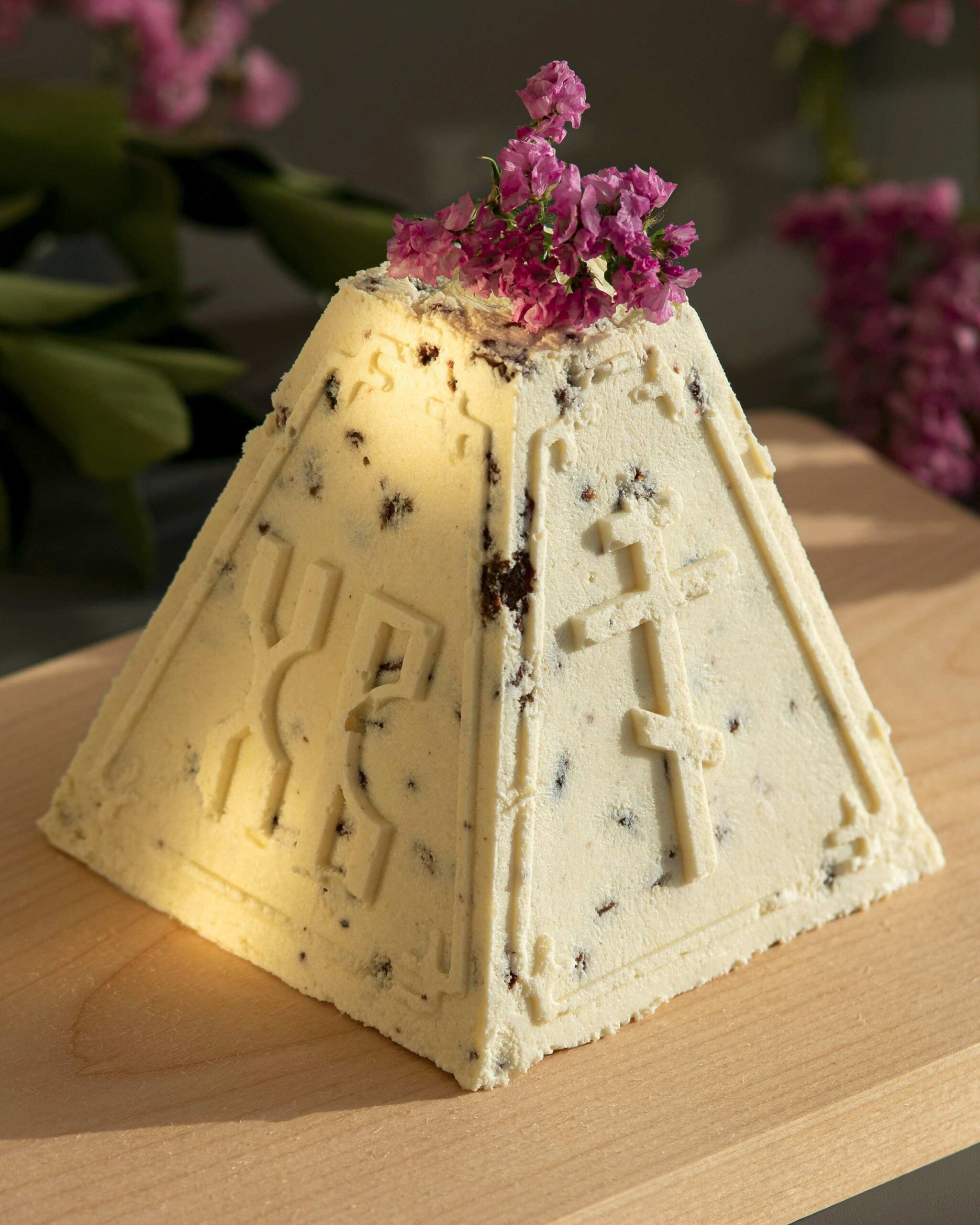
Russian paskha dessert pyramid with Cyrillic symbols and cross
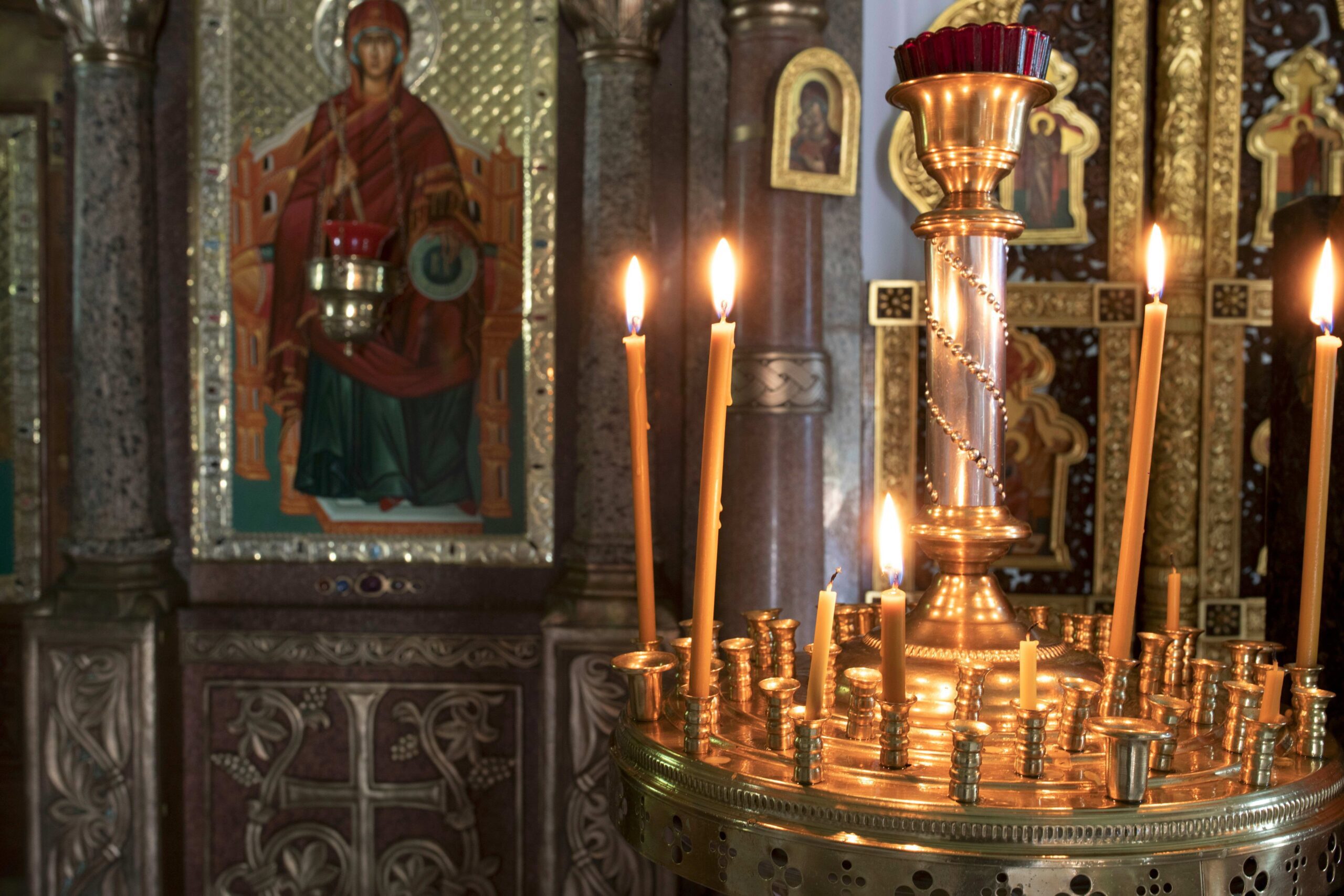
Gilded candelabra with beeswax candles before Orthodox icons
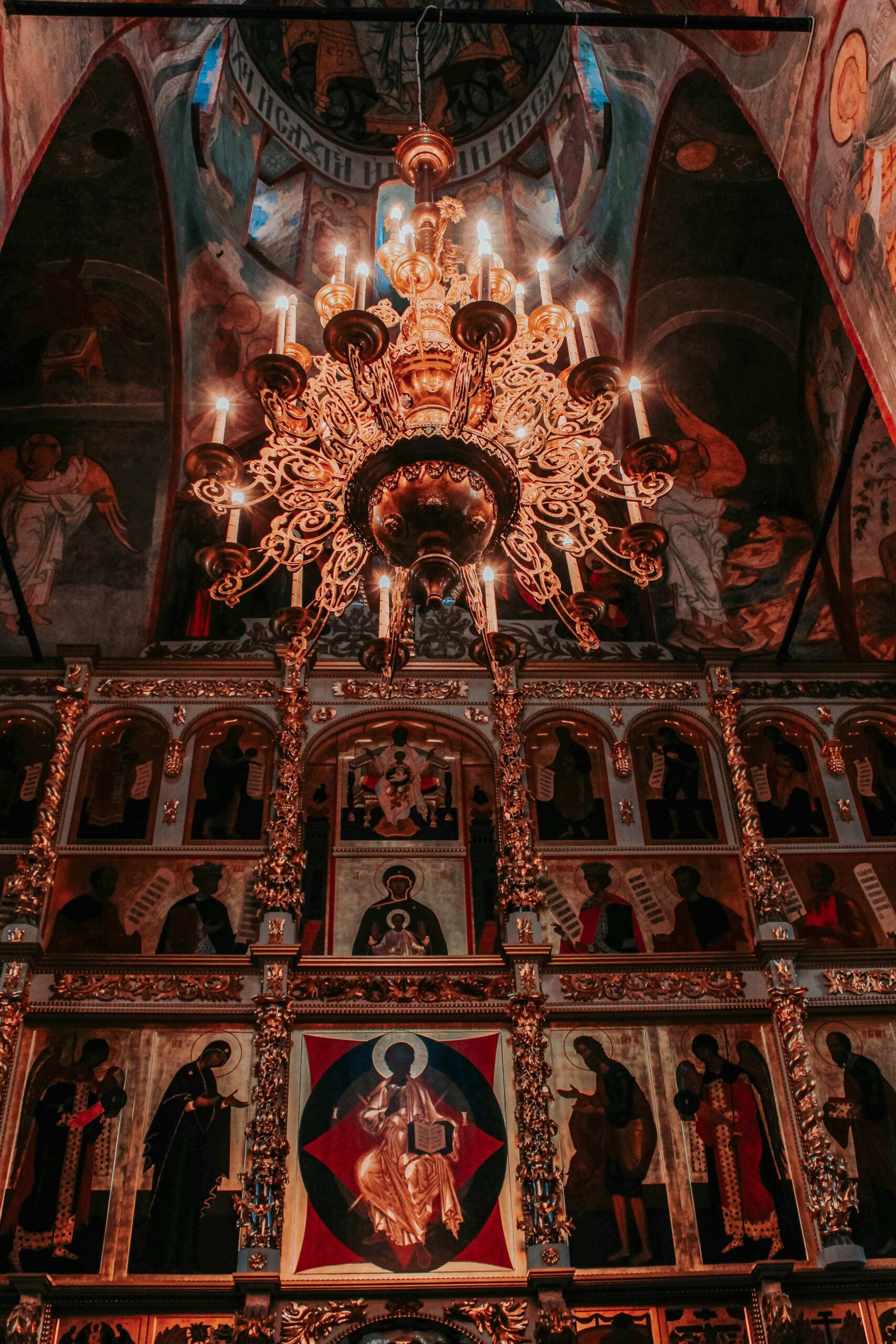
Gilded Orthodox iconostasis — the splendour of the Easter vigil
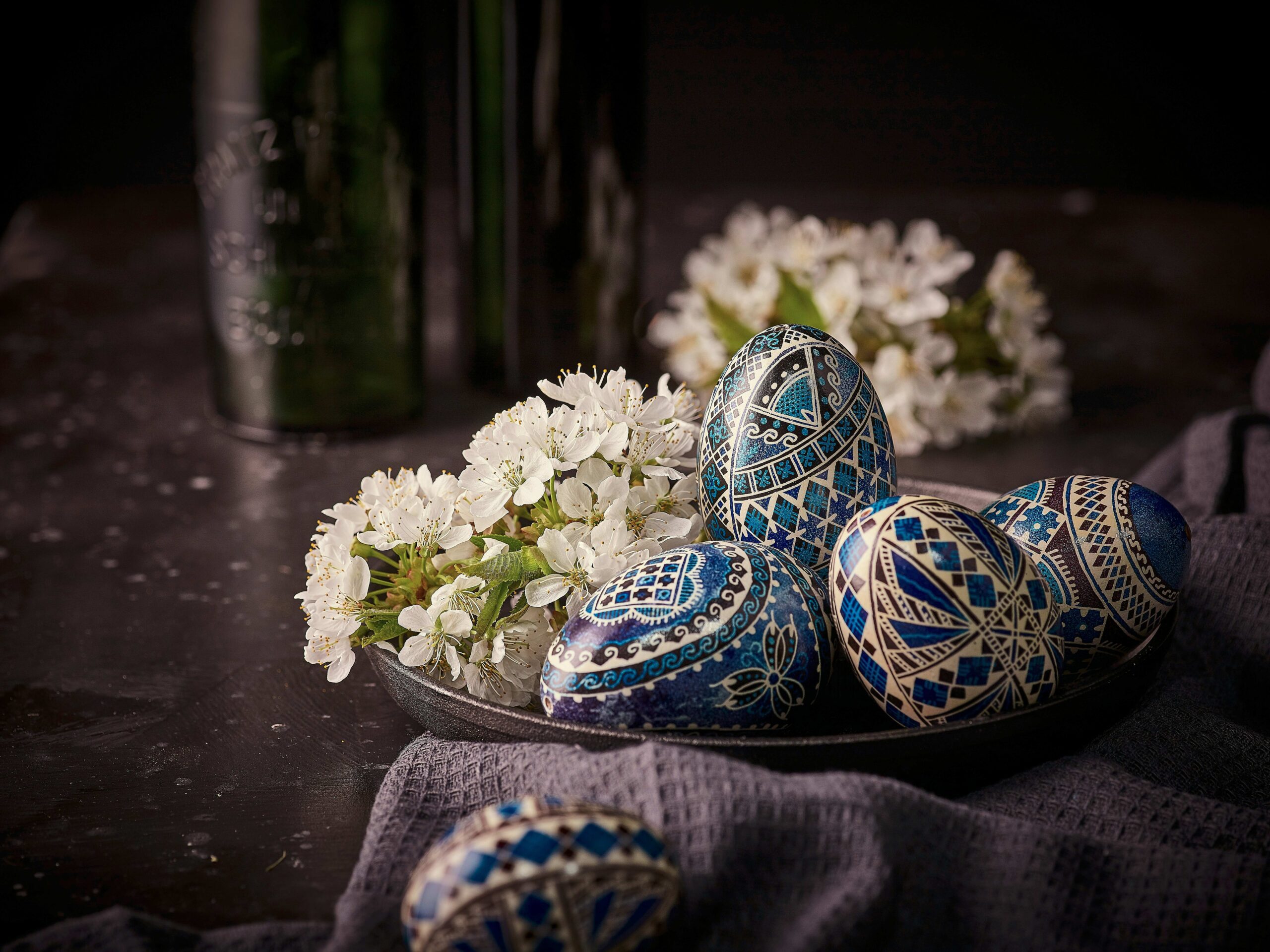
Pysanka Easter eggs with intricate geometric patterns

Silhouettes around a blazing Easter bonfire — Holy Saturday

Forsythia in full bloom — the Easter branch brought indoors
Germany & Italy: Fire, Eggs, and the Scoppio del Carro
The German Easter has a particular quality that distinguishes it from the southern and eastern traditions: it holds the pre-Christian and the Christian in a rather comfortable proximity. The Osterfeuer — the Easter bonfire lit on the hills and fields on Holy Saturday evening — was enthusiastically observed both at the Hohenzollern court and in the smallest Prussian villages. The fire greeted the sun; it drove out winter; the Church gave it new meaning without entirely displacing the old one.
The Osterstrauch is another practice I find genuinely charming: branches of willow or forsythia brought indoors in the week before Easter and hung with hand-painted eggs and coloured ribbons. In old aristocratic households, the eggs were often made by the family — blown out carefully and painted with considerable art. The Lusatian and Thuringian traditions of Easter egg decoration, still practised today by craftspeople of real skill, produce objects that belong not to the novelty shop but to the decorative arts.
In Florence, the tradition takes an altogether more dramatic form. The Scoppio del Carro — the Explosion of the Cart — has been celebrated since the 11th century. An elaborately decorated cart laden with fireworks is drawn by white oxen through the city to the Piazza del Duomo. At the moment of the Gloria during Easter Mass, a mechanical dove — the colombina — is ignited at the high altar and flies along a wire to light the cart outside. If the fireworks ignite cleanly and the dove returns successfully to the altar, the harvest will be good. A tradition that has outlasted every dynasty that practised it deserves, at minimum, a second look.
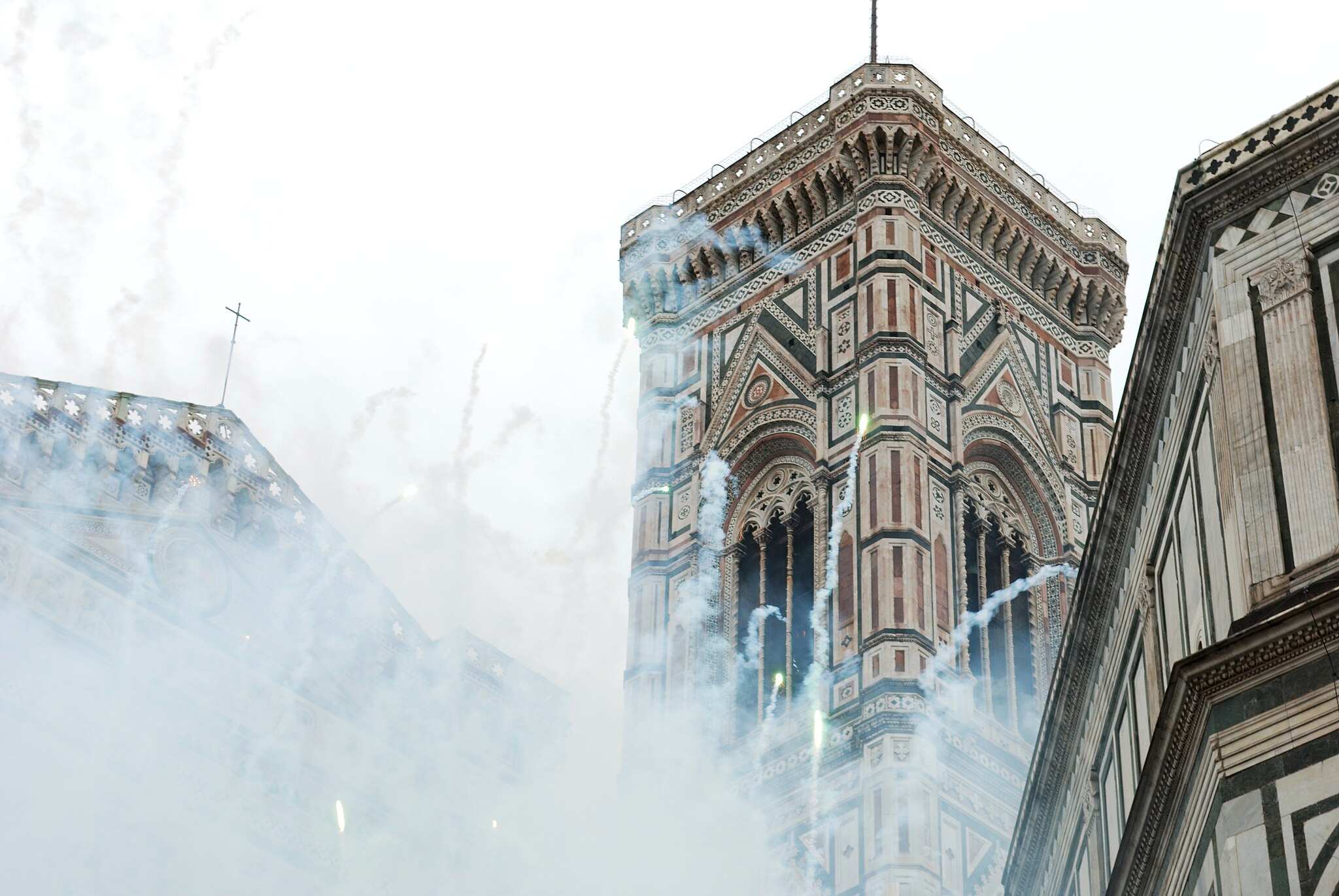
Fireworks before Florence Cathedral — the Scoppio del Carro
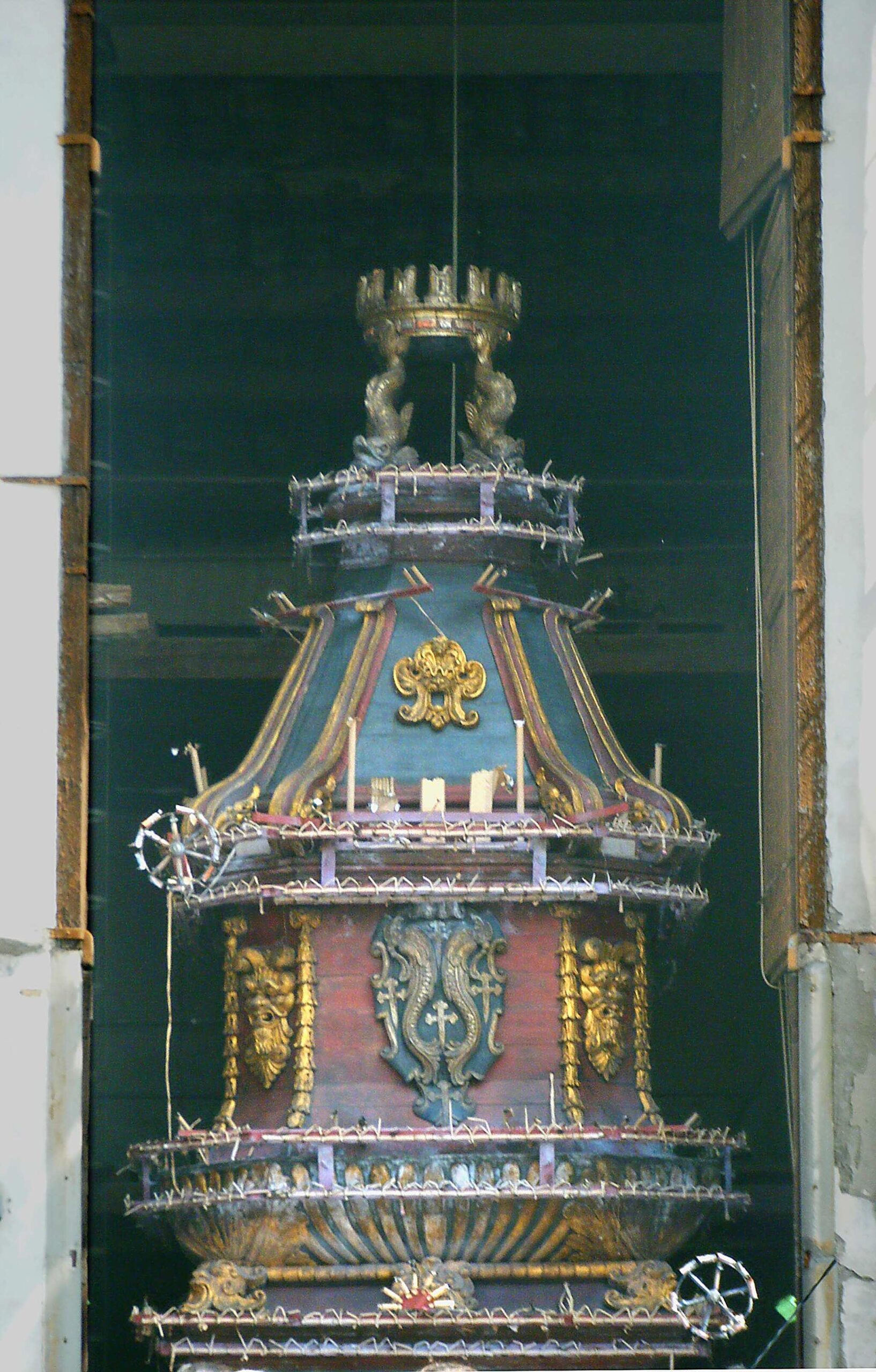
The Scoppio del Carro cart in its depot, Florence
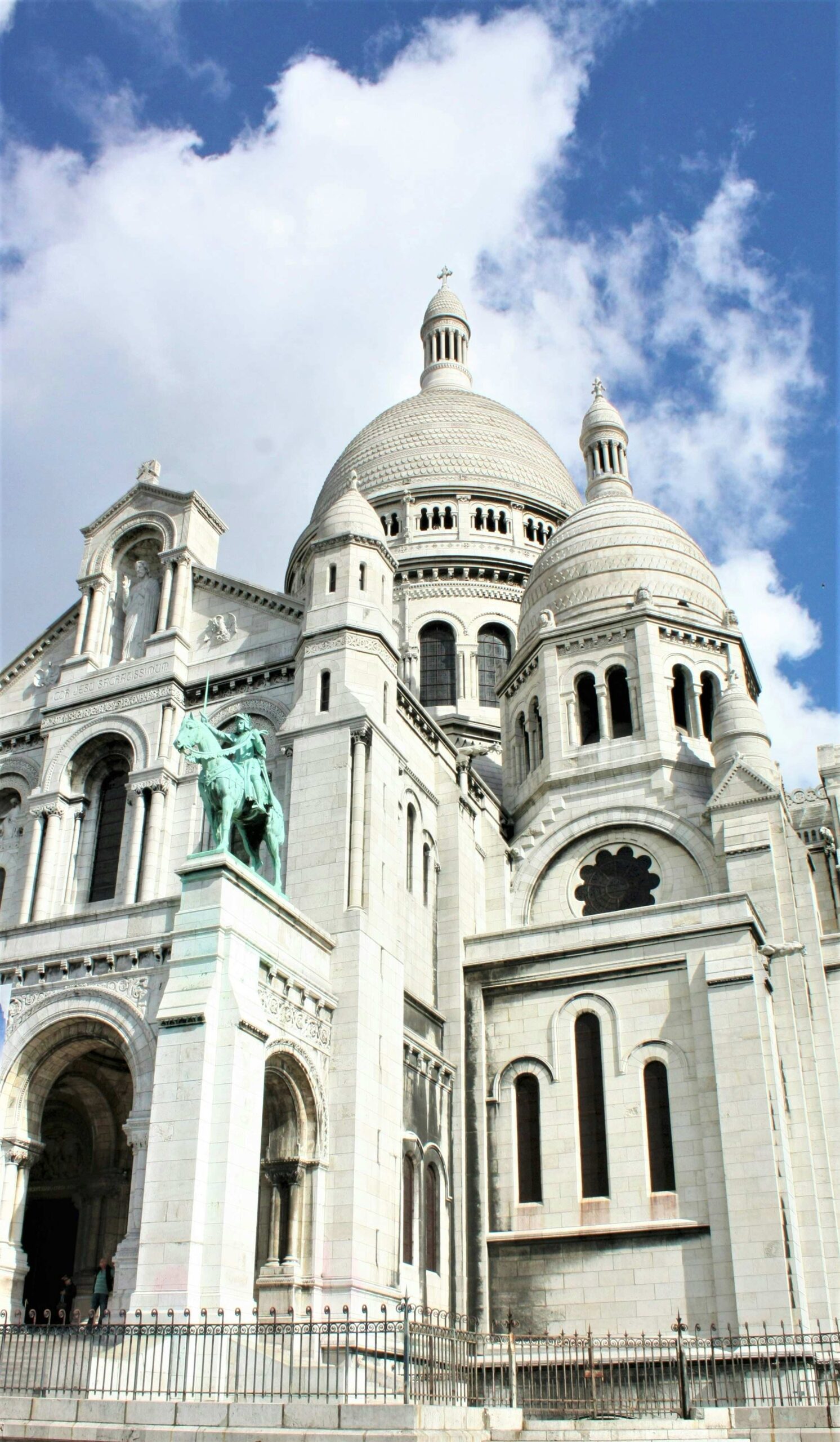
Sacré-Cœur on Montmartre — Parisian Easter
The foot-washing — England, Habsburg Vienna, Russia, in some form almost everywhere — is the image that stays with me. The most powerful person in the room, kneeling before the least. This was not sentiment. It was structural theology made visible: a reminder, built into the ceremonial year whether the sovereign felt it or not, that power carries an obligation of service. The ceremony continued regardless of whether anyone believed it. The structure did the work.
The egg, meanwhile, crossed every cultural boundary without losing its meaning. In Russia, the most exquisite object in the imperial collection; in Germany, a hand-blown, hand-painted sphere of fragile beauty; in England, a gilded gift from the royal accounts of 1290; in France, the cargo of flying bells. The same symbol, endlessly inflected, always pointing to the same thing: something was sealed, and now it is open. Something was finished, and now it begins.
A tradition that has outlasted every dynasty that practised it deserves, at minimum, a second look. Further reading: Smarthistory on medieval feast days and ceremony offers excellent context for the ritual traditions described here.