
An Aristocratic
Easter Menu
From Richard II’s ginger sauce to Romanov kulich — eight centuries of Easter table wisdom, and what it still tells us about the finest meal of the spring.
Do not, I implore you, rush the lamb.
The weeks before Easter change the quality of light. Something shifts in the kitchen, too — a particular restlessness, a reaching for recipes one hasn’t opened since last spring. If you have felt it, you are in very good company. The same instinct has governed the finest tables in Europe for the better part of a millennium, and the logic behind it is more precise than mere habit.
The Easter menu is one of the great set pieces of aristocratic entertaining — one of the few occasions on the calendar where the sequence of dishes, the materials on the table, and even the timing of the meal are not matters of personal preference but of accumulated wisdom. Long before the language of seasonal eating existed, the finest households in Europe understood that Easter Sunday demanded a particular kind of table: not the grandest of the year, not the most elaborate, but the most precisely calibrated.
Lamb, eggs, the tender first vegetables of spring, silver on the linen, the meal eaten at midday when the light was at its fullest. These choices were not arbitrary — they are, in every sense, the foundations of what we now call quiet luxury entertaining: nothing excessive, everything meaningful. Once you understand them, composing your own Easter table becomes not a question of choosing between recipes, but of understanding what the season is actually asking for.
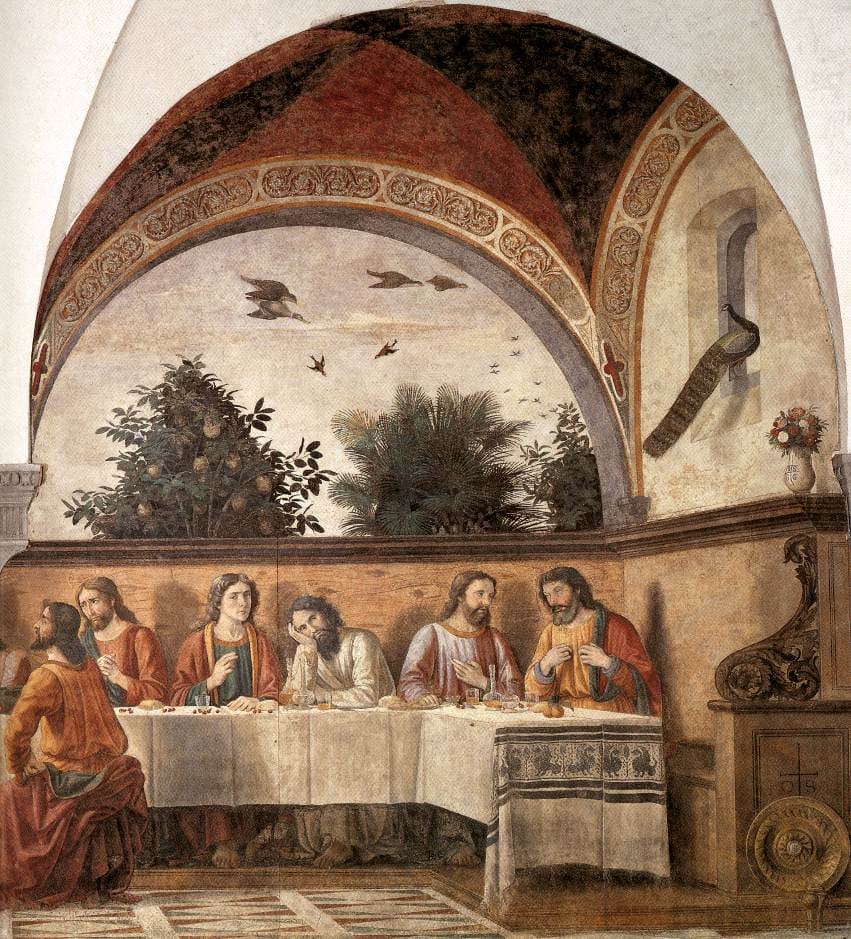
Ghirlandaio, Last Supper, 1480 — the white linen table as sacred setting
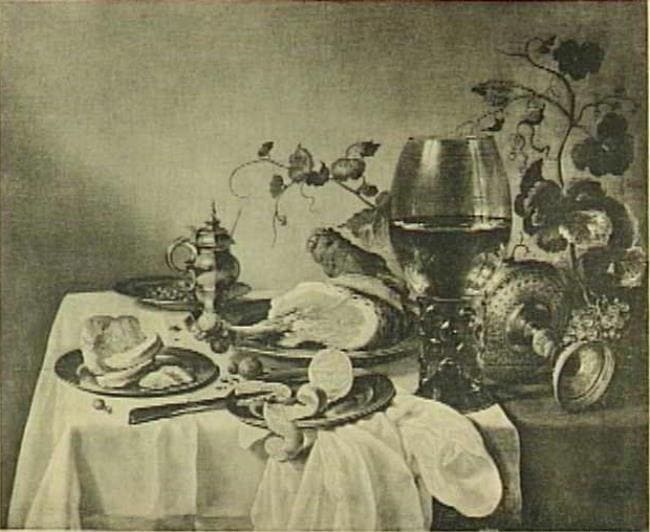
Pieter Claesz, Breakfast Still Life, 1640 — ham, silver, white linen
The Medieval Table: Where It All Began
The earliest detailed Easter menu we possess belongs to Richard Swinfield, Bishop of Hereford, who kept meticulous household accounts for the year 1289–90. His Easter feast at Colwall — attended by at least seventy guests — required twenty-seven lambs, six calves, five pigs, three fat deer, one hundred and forty-eight pigeons, twelve capons, and four thousand eggs. Four thousand. One rather imagines the kitchen staff had very little patience left for Easter egg hunts.
The lamb was the undisputed centrepiece — always roasted at a feast of this standing, served with a ginger sauce from The Forme of Cury, Richard II’s great cookbook held at the British Library: vinegar, salt, and ground ginger thickened with fine breadcrumbs, the sharpness cutting through the richness of the meat with precision. Beside each place, silver cutlery gleamed in the firelight — a detail worth pausing over. Silver was not chosen merely because the household possessed it. By the thirteenth century, the finest tables already understood that silver belongs to the intimate feast rather than the purely ceremonial one: its cooling, reflective quality suits a meal eaten in good company, in daylight, in early spring. At the same table, Edward I of England ordered four hundred and fifty eggs gilded with gold leaf and coloured dye as Easter gifts for his household — purely decorative, distributed as tokens of celebration. The impulse to make the Easter egg beautiful is, it seems, rather older than Fabergé.
For your table: roast a leg or saddle of young lamb with garlic and rosemary, and serve it at midday — not in the evening. The medieval instinct was correct: the Easter meal belongs to the brightest part of the day, when the light through the dining room windows does justice to the white linen and the silver. Serve the ginger sauce if you are feeling adventurous; mint sauce if you are feeling English.
Imperial Russia: The Forty-Eight Course Easter Menu
If the medieval English feast was generous, the imperial Russian Easter menu was something else altogether. In Russia, the Orthodox tradition held that the meal should match the fast that preceded it — meaning, by a certain iron logic, that for each of the forty-eight days of Great Lent, one course should be served on Easter Sunday. A forty-eight course Easter menu. One has to admire the ambition, even if the practicalities beggar the imagination.
For the Romanov family in 1903, the table included whole roasted pheasant, partridge, and black cock alongside sturgeon, salmon, and beluga. There was lamb alongside veal, tongue, smoked meats, and an array of pirozhki served on great platters beside goblets of rock crystal that caught the candlelight with an almost theatrical brilliance. The rock crystal was not merely decorative: its cold, mineral clarity had been prized at the finest European tables for centuries precisely because it does nothing to interfere with what is poured into it — no colour, no weight, no warmth of its own. The table’s palette was pure: white linen, silver, clear glass, and the colours of the food itself.
But the true soul of the Russian Easter table — the dishes no other tradition can claim — are the kulich and the paskha. The kulich is a tall, cylindrical sweet bread, baked in a high round tin so that it rises proud above the rim like a church dome, enriched with eggs, butter, saffron, dried fruits, and candied citrus peel, frosted with white icing and bearing the Cyrillic letters XB — Khristos Voskrese, Christ is Risen — on its crown. The paskha is a pyramid-shaped cold dessert made from tvorog, a fresh curd cheese similar to a very fine ricotta, beaten with butter, sugar, eggs, vanilla, and sour cream until utterly smooth, then pressed into a mould and weighted overnight to drain. Unmoulded, it is a dense ivory pyramid embossed with the same letters, decorated with nuts and dried fruits, traditionally spread on slices of kulich — the combination so perfectly balanced that one immediately understands why it has survived unchanged for several centuries.
For your table: the kulich is entirely achievable at home with a good enriched dough recipe and a deep round tin. The paskha requires no cooking whatsoever — only patience and a muslin-lined colander. Serve both together: the pale ivory and white of the two desserts against white linen and silver has a quietness to it that no arrangement of purchased confections can replicate.
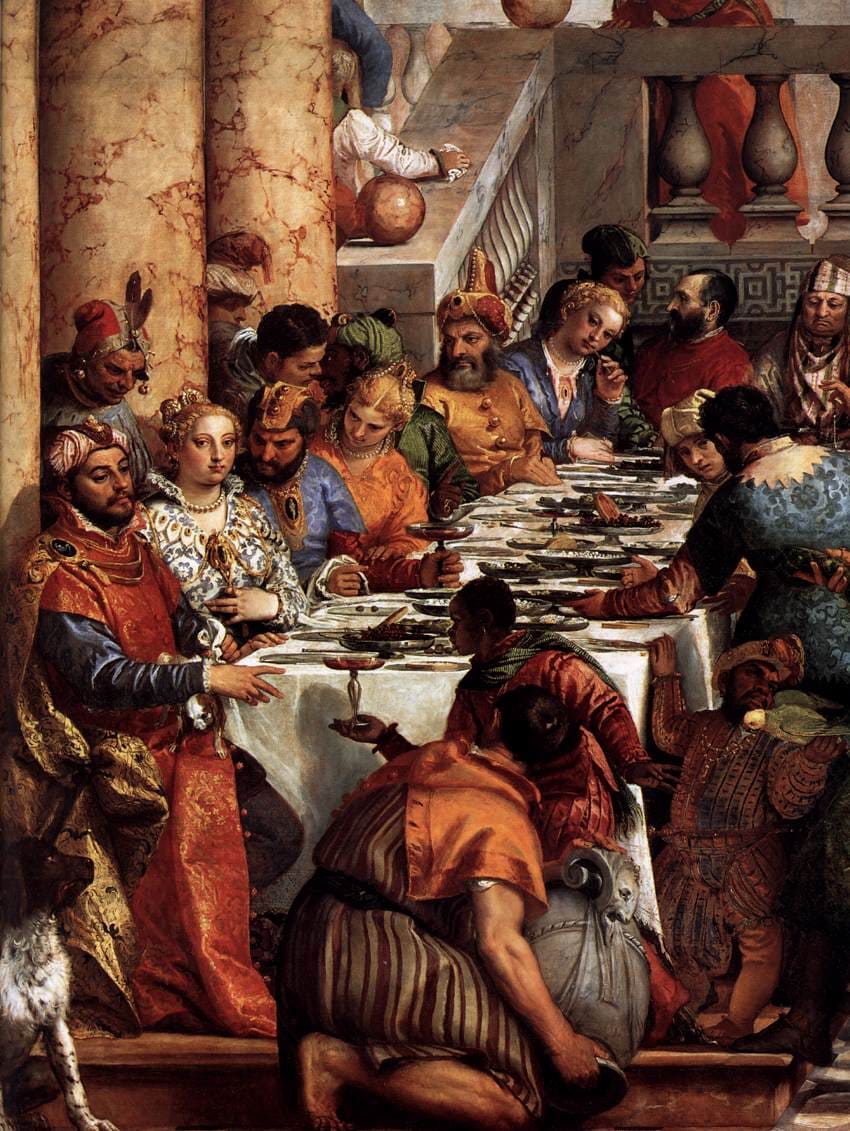
Veronese, Wedding at Cana (detail), 1563, Louvre — silver vessels at the great feast
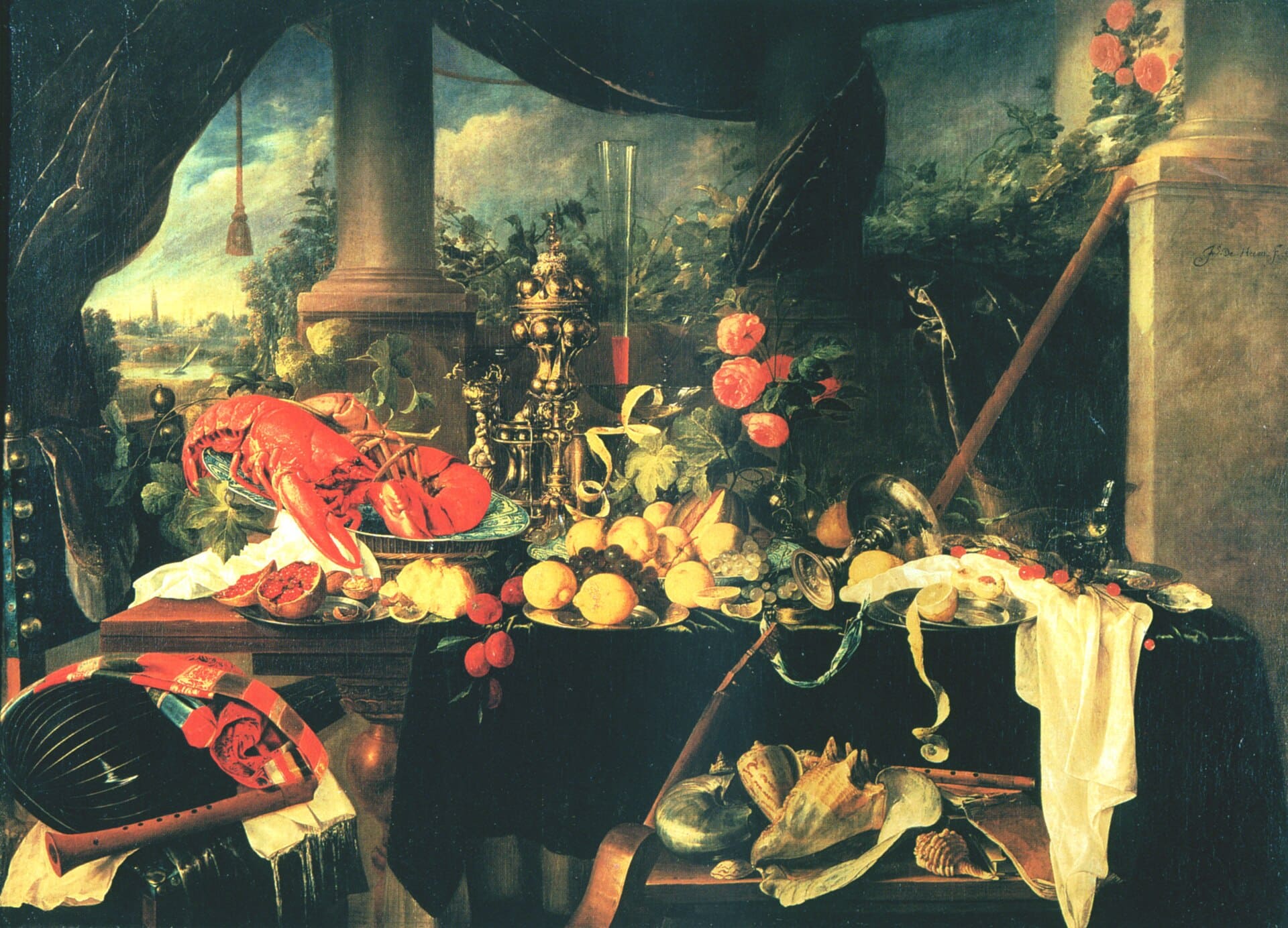
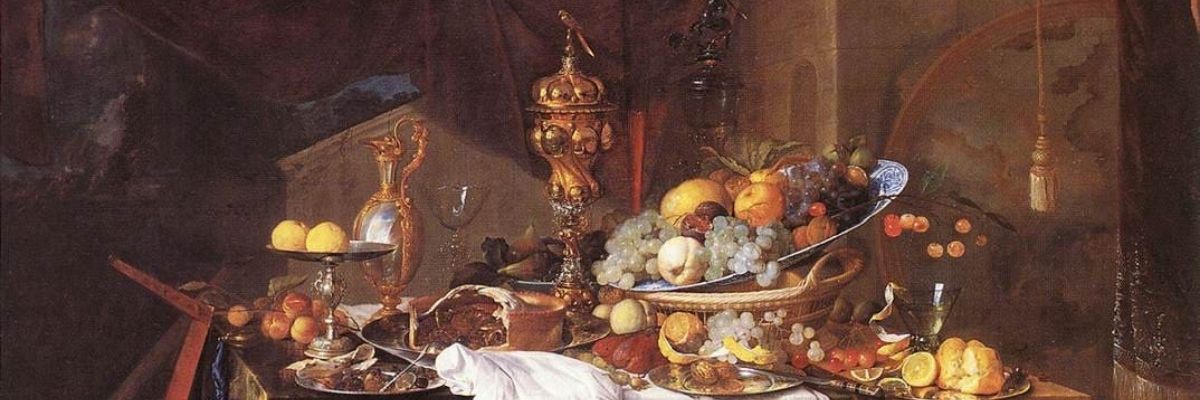
Jan Davidsz. de Heem, Pronk Still Life — lobster, nautilus cup, white linen
France: Escoffier and the Lamb of Spring
In France, the Easter table has always been a rather more secular affair — which is to say, the French manage to honour their traditions whilst ensuring that the food remains, above all, superb. The repas de Pâques is a long, slow, many-coursed lunch, traditionally eaten on Easter Monday, laid on fine linen and expected to last well into the afternoon. The meal has a particular arc to it — from cold and light to warm and rich to a close that is sweet but not heavy — and it is an arc that has been observed consistently enough to be considered law.
Auguste Escoffier understood the Easter table with his characteristic precision. At the Carlton Hotel in London, he composed Easter menus of singular refinement: a feast built in ascending notes of delicacy, with the agneau de lait — milk-fed baby lamb — as the crowning moment. These are animals raised entirely on their mother’s milk, which gives the meat a colour that is almost white and a flavour of extraordinary sweetness. At Easter, this meat is roasted simply — garlic, thyme, a little butter — because anything more elaborate would be an impertinence.
For those who prefer their lamb in a sauce, the French tradition offers the Navarin Printanier — the great spring stew of lamb shoulder and neck, braised in their own juices with wine and stock and finished with the first tender vegetables of the season: young turnips, baby carrots, peas barely out of their pods, and new potatoes no larger than a walnut. The meal traditionally opens, in Burgundy at least, with a jambon persillé — a magnificent cold terrine of ham set in a vivid green parsley aspic, sliced thickly and served at the table in its earthenware vessel. Chunks of pale pink ham suspended in trembling jade-green jelly, the whole thing glistening with garlic and white wine. It announces spring before a single warm dish has appeared.
For your table: open with the jambon persillé — made two days ahead and unmoulded at the table — then the navarin, which improves overnight and need only be reheated gently before serving. Escoffier’s instinct for a white-and-pink table is worth borrowing: white linen, white roses or narcissi, silver, and the pale colours of the food doing the rest of the work.
England: The Quiet Easter Table
The English Easter menu has always been somewhat less theatrical than its Continental counterparts — which is not, I should point out, a criticism. A well-roasted leg of lamb, mint sauce, new potatoes, the first asparagus of the season, and a simnel cake to finish: there is a particular rightness to this sequence, and it is a rightness that does not need defending. In the great country houses of the nineteenth century — their drawing rooms warmed by fires, their floors laid with Persian carpets worn to the comfortable softness of long use — Easter Sunday luncheon was a substantial but unhurried affair.
The simnel cake is older than most people realise. The word itself appears in medieval records as the finest white wheat bread, reserved for the greatest feast days. By the nineteenth century it had evolved into the rich, dark fruitcake we know: bound with marzipan both within and without, its top decorated with eleven marzipan balls representing the eleven faithful apostles — Judas, one notes, is not included. The Victorian country house Easter would have opened with a dressed salmon or a watercress soup, moved through the roast with mint sauce, gratin dauphinois, and spring vegetables, and concluded with the simnel cake and the first strawberries of the season if the weather had been even remotely cooperative.
For your table: make the simnel cake a week ahead — it keeps well and improves. Dress the table simply: a linen tablecloth, silver, a jug of narcissi or white tulips. The meal should be at midday and it should not be rushed. The asparagus, when the timing is right, needs nothing more than butter and a little salt.
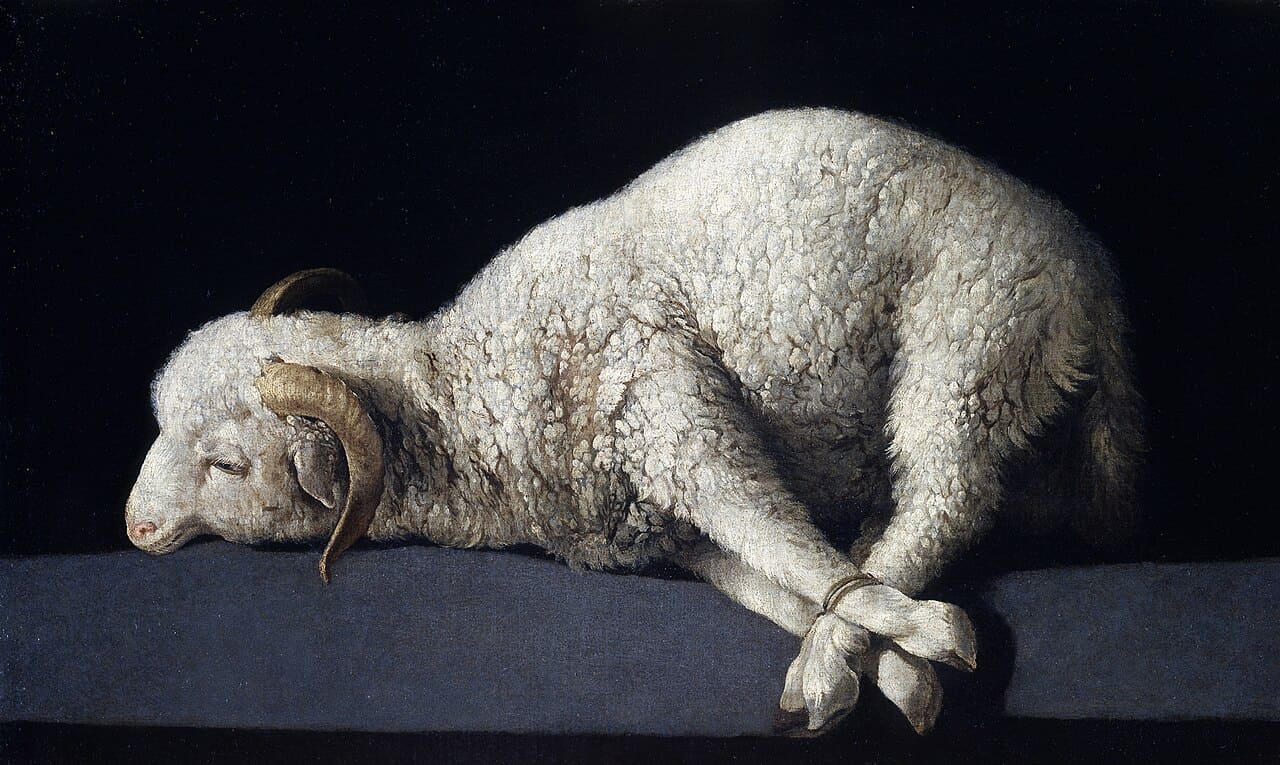
Zurbarán, Agnus Dei, c. 1635–1640, Prado, Madrid — the lamb as the centre of the Easter table
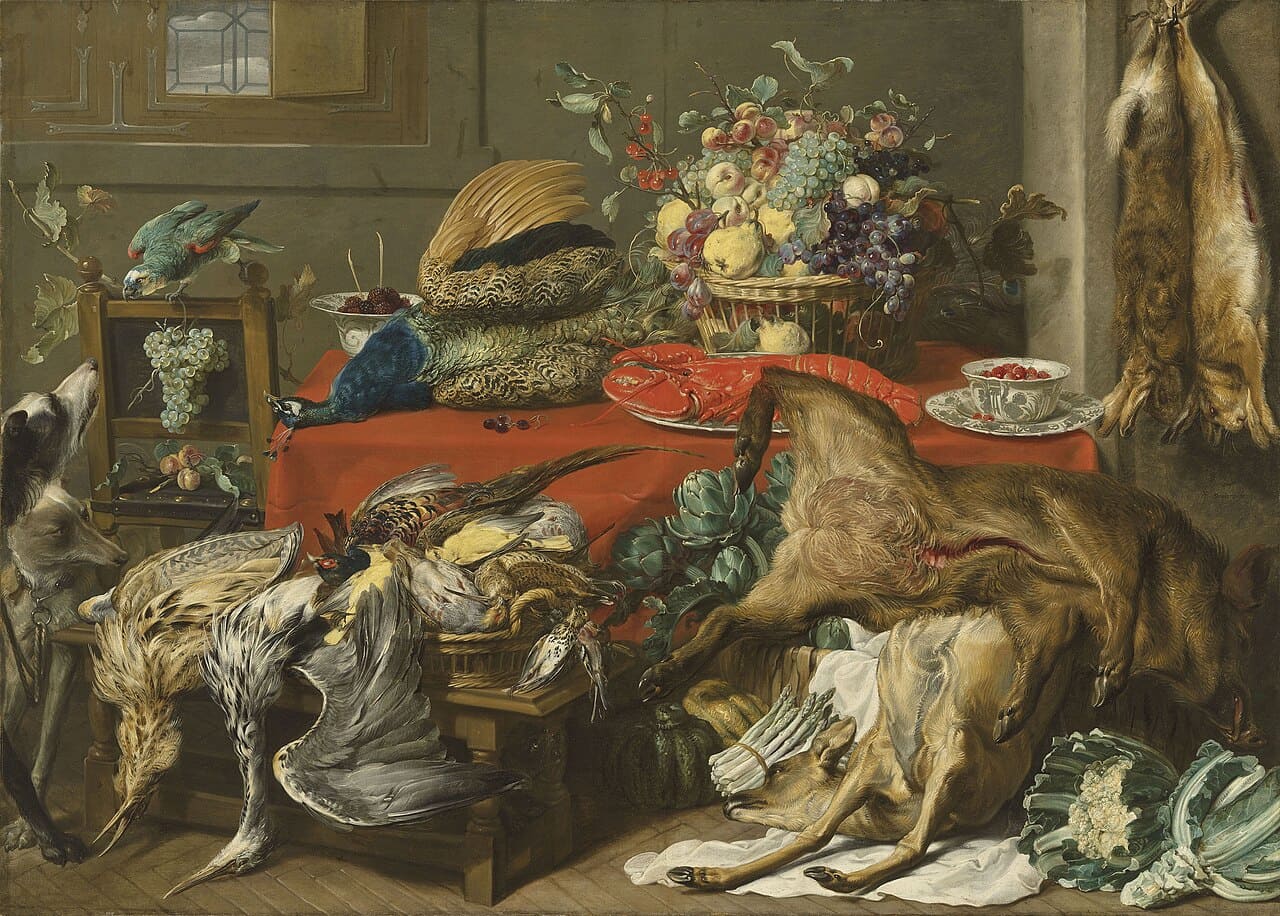
Frans Snyders, Larder Still Life with Game and Fruit — the abundance of the aristocratic Easter feast
One cannot spend time with these menus — medieval, imperial, French, English — without noticing what they share. The lamb, obviously. The eggs in one form or another. The spring vegetables that could not have appeared a month earlier. And beneath all of it, the same table logic: silver rather than gold at the intimate feast, white linen always, the meal at midday, the sequence moving from light to rich to sweet.
These were not conventions arrived at by accident. Lamb is a spring meat — the animals are born in late winter and reach their finest flavour precisely at Easter. Asparagus and young peas are spring vegetables that cannot be forced without losing the quality that makes them worth eating. Silver, cooling and reflective, suits the quality of early spring light in a way that the warmer, heavier presence of gold does not. Linen grows finer with each washing, holds its cool pressed surface through a long meal, and gives the table a cleanness that nothing woven from other fibres can replicate. The structure did the work, whether or not anyone named it.
The historic Easter menu has been, for rather longer than we sometimes remember, one of the great institutions of European civilised life. Whatever you serve this year — whether a navarin simmering gently since morning, or a kulich carried in triumph from the kitchen, or a simnel cake on a linen tablecloth with a cold glass of white Burgundy — serve it with the knowledge that you are doing something people have done at this time of year for at least eight centuries. And do not, I implore you, rush the lamb.