The Strandkorb
for Coastal Luxury Living
That distinctively German wicker throne — and why claiming one as your own transforms outdoor living into something rather special.
When comfort is wanting, one commissions a solution. A certain von Maltzahn trait, as it happens.
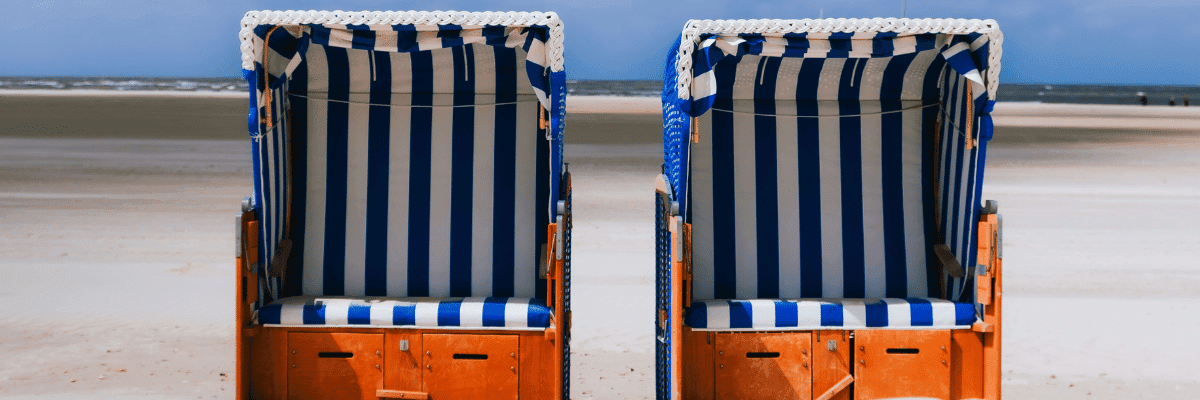
There’s something rather wonderful about a Strandkorb — that distinctively German wicker throne that transforms any space into a private retreat. While most know them from seaside promenades, the true pleasure lies in claiming one as your own, whether installed on a private stretch of beach, a coastal terrace, or sheltered within garden walls. Either way, it becomes your own sheltered sanctuary, year after year.
The story of how these elegant shells came to be is one I’ve always rather enjoyed, particularly as it touches my own family history. In 1882, a resourceful basket weaver named Wilhelm Bartelmann created the first Strandkorb in Rostock for a woman suffering from rheumatism who wished to enjoy the Baltic coast without the harsh wind. The commission, as family lore has it, came through the von Maltzahn circle — though whether it was an actual family member or simply someone within our social sphere remains charmingly unclear. Either way, it speaks to a certain von Maltzahn trait: when comfort is wanting, one commissions a solution.
What makes a proper Strandkorb so appealing is its genius of design. The high wicker back and angled hood create a microclimate — sheltered from wind, warmed by sun, utterly private even in company. One sits cocooned, watching the world from a protected vantage point. It’s the feeling of being simultaneously outdoors and contained, exposed and hidden.
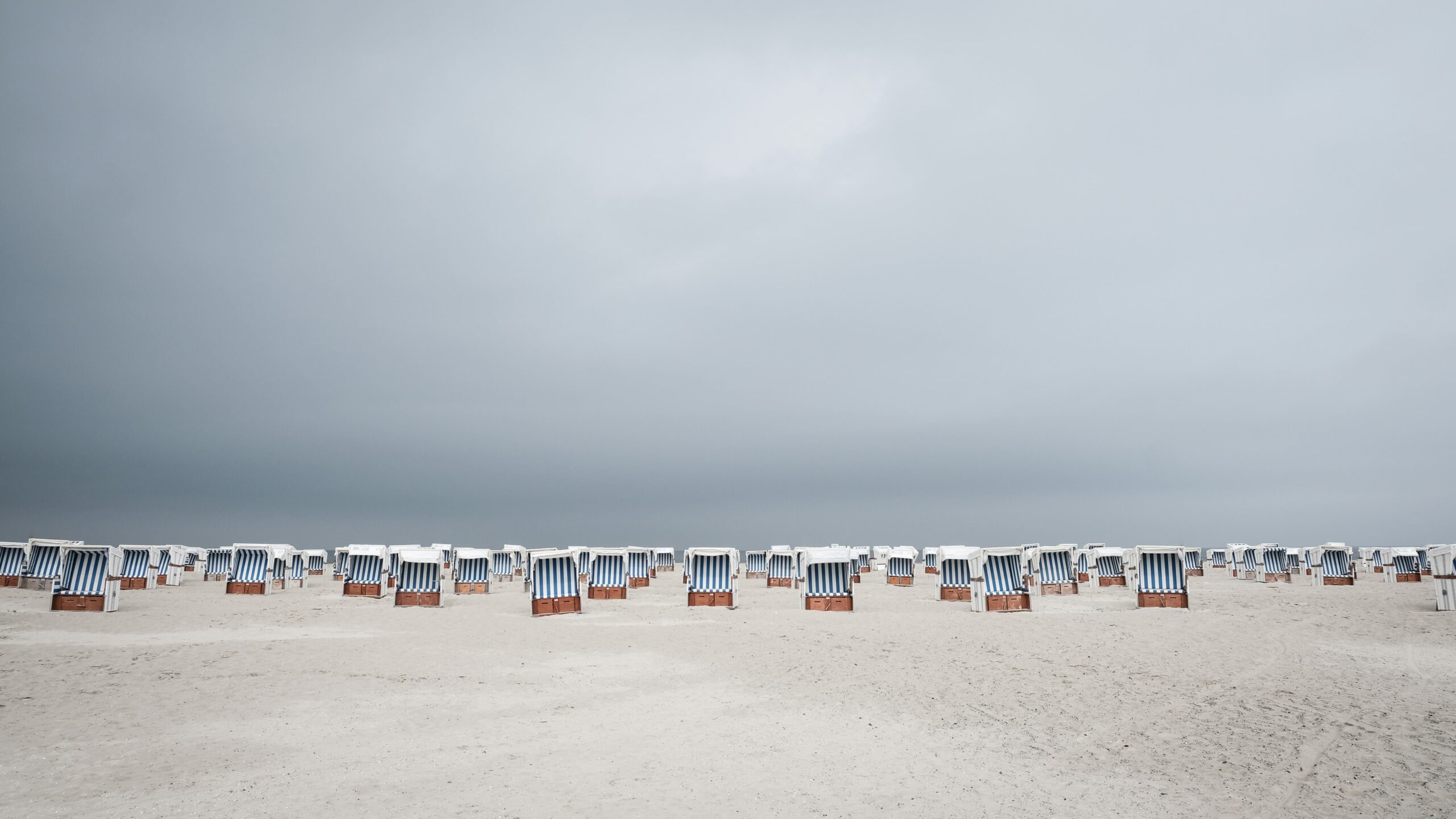
Strandkorb wicker chairs with blue striped canopy on German Baltic beach
A Garden Sanctuary
The beauty of installing a Strandkorb where you need it most — whether on your own stretch of beach, at a holiday house on Sylt or Rügen, or on a private terrace anywhere coastal winds meet civilised living — is the constancy it offers. They’re equally at home on a terrace in the Hamptons as on the Côte d’Azur, as fitting in Marbella as they are overlooking the dunes of Nantucket or the rugged beauty of Scotland’s coastal estates. Cape Town’s breezy Atlantic shore, the windswept elegance of New Zealand’s Hawke’s Bay, even the sophisticated calm of Uruguay’s José Ignacio — anywhere the sea breeze calls for shelter, a Strandkorb answers beautifully.
What matters is the pleasure of settling into one’s own wicker cocoon with the morning papers and coffee, the pages staying exactly where you’ve placed them, the cushions warm from captured sun. No wrestling with wind, no shifting positions — simply the quiet luxury of being comfortably installed whilst the elements do as they please around you. Morning coffee facing the sunrise, afternoon shade for reading, evening aperitifs watching the light change. The hood adjusts to follow the sun or provide shelter from a passing shower. In autumn, wrapped in blankets, they extend the outdoor season by weeks.
Choosing Wisely
When selecting a Strandkorb, quality reveals itself in the details. Proper ones are built to last decades — the wicker should be tightly woven, the frame solid wood (teak or robinia for weather resistance), the cushions substantial and properly fitted. The traditional North German two-seater remains the most graceful proportion, though single-seaters suit smaller gardens beautifully.
Colours matter more than one might think. The classic blue-and-white striped canvas is timelessly elegant, but I’ve seen stunning examples in natural linen, deep navy, even a sophisticated charcoal that anchored an entire terrace scheme. The key is choosing something that will please you in five years, not just this season. Maintenance is surprisingly minimal — weatherproof cushions brought in during heavy weather, perhaps a protective cover in deepest winter. The wicker develops a gentle patina over time: not damage, but character.
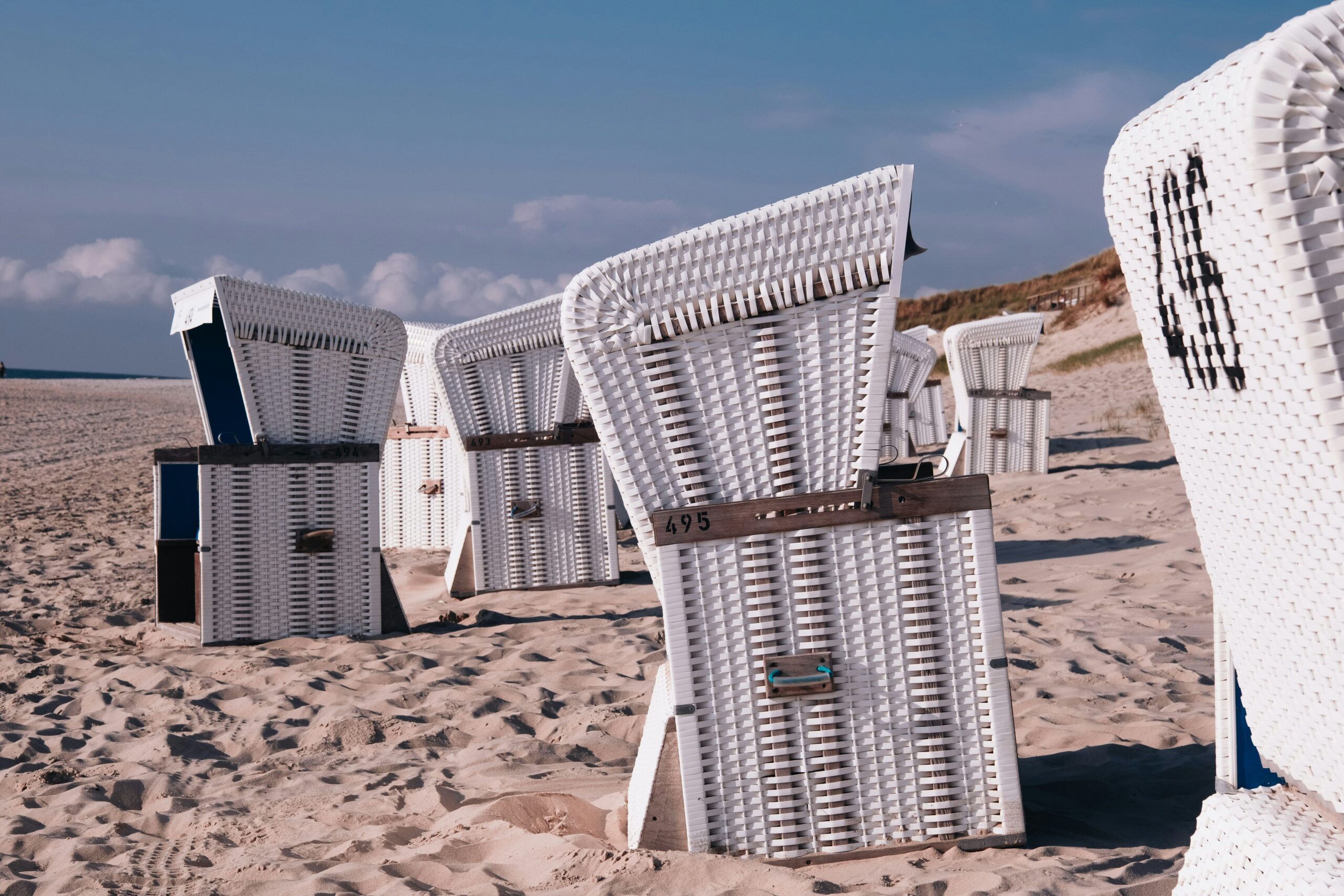
Strandkorb white wicker chairs with blue hoods on sandy dune overlooking North Sea.
For those with space and inclination, a Strandkorb transforms outdoor living into something rather special — a permanent invitation to pause, to sit, to simply be. It’s the sort of addition that changes how you use your spaces, creating a destination within your own grounds or along your own shore.
The finest Strandkörbe still come from traditional makers along the Baltic and North Sea coasts. Korbwerk in Heringsdorf has been crafting them since 1925, each piece still made largely by hand. Strandkorbwerk in Glückstadt — near where that first commission was fulfilled — continues the tradition with meticulous attention to construction. These aren’t purchases one makes lightly, but investments that grace a garden for generations. And that, I think, is rather the point of good outdoor furniture: not merely to fill a space, but to create a reason to inhabit it.
Below, I’ve gathered the world’s finest makers — artisans who still craft these shelters with the care and precision they deserve. Each offers bespoke commissions: woods, weave colours, premium fabrics, and individual configurations to your specification. Allow four to eight weeks for custom orders.
Similar Posts
Winter Gardens: Victorian Charm Meets Modern Living
LIVING Winter Gardens:Victorian Charm Meets Modern Living Those graceful glass rooms where indoors and outdoors meet in quiet harmony — and why placement, light, and material matter more than you might think. By Maria von Maltzahn · February 2026 The owners took breakfast there every morning, regardless of the weather. Utterly civilised, I thought —…